Did I write that right?

Image:fanpop

image:fanpop

So, here I sit again in front of those sheers on the window that soften the view.  Write without a purpose or goal in mind, my writing teacher, Jack, instructed.  How does that work?  Especially when the mind is always thinking, moving from subject to subject.  I don’t know that I get this exercise, God.  How do I write with no goal or agenda?  Do I write the random thoughts that lead to whole other subjects?  Do I write the ongoing conversations that you and I have throughout the day?  Do I write the goals for the future?  The fears?  The frustrations?  The hopes?

If I have to get Jack’s book out to look at the example again, isn’t that writing with a purpose?  And, since I’ve spent the last few years thinking about stories and plots and characters and writing them, how does that get turned off?

I was just preparing for tomorrow, for the class I help teach on Sunday’s.  It was all about listening to God’s Spirit speaking to my spirit.  How do I have all that in my head and not write about something specific?

Meanwhile, Mother is in the other room burping.  Loudly.  It’s the GERD reaction to what she eats.  I’ve explained to her several times that’s why she has a hard time swallowing, getting medication down, taking all the vitamins and supplements I want her to take so that she can be at her best.  She’s determined to eat what she wants so I drive her crazy with my reminders about GERD.  She complains about her GERD symptoms, which drives me crazy.

Ok, now there I go, telling a story.  Or am I just embellishing or explaining a small thought into full-fledged sentences and story lines?  I’m not sure I get this process.

So, how do I do this?  If this is just a journal of what’s happening in my head, then it’s a writing down of thought processes that always lead back to you, God.  Because I don’t like dwelling on any thought, fear, hope, joy, whatever, without bringing it back into context of how it fits into You, God.  For me, that’s what pulls all of life together.  Knowing that there’s a bigger picture than I can see, but taking joy in the knowledge that it’s like the backside of an intricate, detailed tapestry.
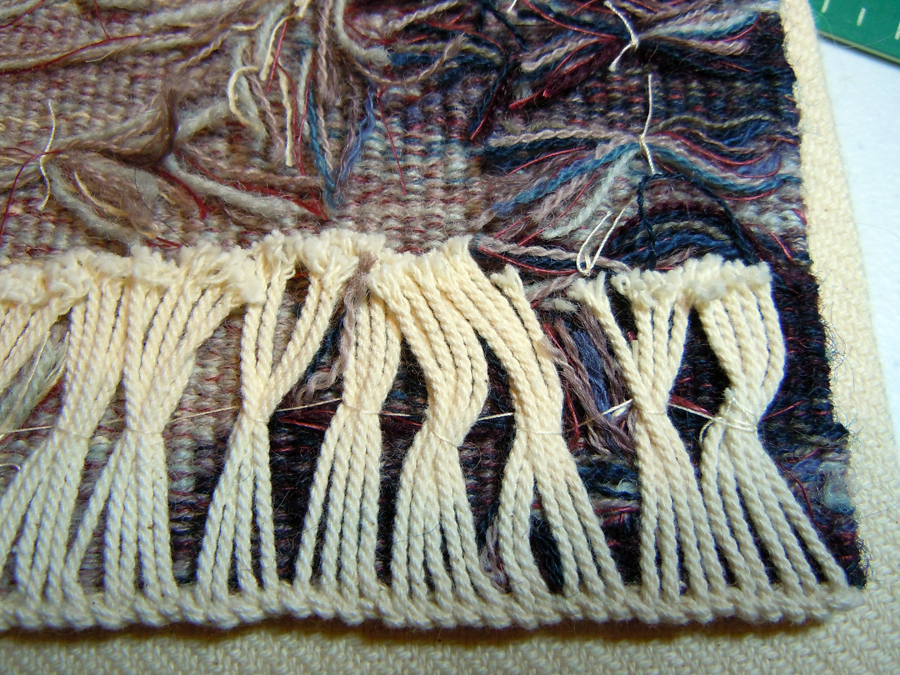
image:tapestryshare.blogspot

image:tapestryshare.blogspot

Lots of random threads that seem to go nowhere, colors intermingled, some tiny stitches overrun by long, bold stitches, everything seemingly unorganized.  But, when the tapestry is turned around, there is a beautiful scene or portrait that couldn’t have been planned or designed by me, yet it’s there and every now and then I get a glimpse of the beauty that is being made through the pain and struggle, or during the inane and boring, or the frustrating and difficult.

Hold that thought.  Mother is calling from the other room to come turn off the ceiling fan over the dining room table.

It’s another hot day and the A/C can do just so much to take the heat off the house.  Personally, I’d be happy with fans in every room, but the medication Mother takes for high blood pressure and huge edema in her feet and legs, lowers her blood pressure and with it her body temperature so that she’s always chilled.  And accusing me of trying to freeze her out when it 78 degrees inside the house.  Good thing I’m beyond hot flashes or we’d really go at each other in frustration.

So, now the fan is off, the orchid is watered and I can return to the keyboard and she can return to trying to stay awake.  I read the other day that the curse of the elderly is spontaneous sleeping.  Mother and I laughed over that because it’s true and she is always trying to stay awake.  Or maybe I laughed and Mother frustratingly agreed it was true.

Mother’s calling again.  It seems the water that I just gave the orchid was too much because it’s running out of the pot.  Good thing I put the pot on the table before I watered it so that it has a long way to run before it runs off the edge of the table.  Mother, of course, is sure that I’m about to flood the dining room.  It only takes three paper towels to sop up the excess and Mother is mollified.  Somewhat, anyway.

image:123rf

image:123rf

She and I have two different outlooks on the world.  Yin and Yang.  I tell her that her glass is always half empty and she tells me no, it isn’t, her glass is cracked and the liquid is oozing out the bottom.  Totally agree with that!

Daddy’s glass was always bubbling up and the excess running over the top.  How in the world did her live with her for sixty-one years and not lose his excess?  How did he retain his equilibrium and provide enough for her as well?  Well, I know the answer to that.  I’ve never known anyone who loved God more and spent more time with God daily than he did.  To me, that proves it.  God has to be big because he’s bigger than Mother’s pessimism.

Which brings me back to the whole point of a journal.  For me, anyway.  It’s reaffirming, with every rabbit trail, every thought, every distraction, that God is big.  Big enough to get me through.  And, thankfully!  To get me through with excess bubbling over the top of my glass instead of leaking out the bottom.

and the “Bizarre Doctor Award” goes to….

image:silverdoctors

image:silverdoctors

Have you seen the British show “Doc Martin”?  It airs on public television and Mother and I watch it without fail, even though we’ve seen all five seasons several times.  We keep hoping that just maybe this Thursday night will be the night they’ll tell us when we can expect to see season six.  It’s set in rural England and is about a surgeon who because of his new aversion to blood becomes a general practitioner.  He’s uptight, tactless, socially challenged and doesn’t necessarily set out to torture his patients but he never fails to offend several people per episode.  While miraculously solving several health problems, of course.

It’s fun to watch the mayhem that occurs in the small town as the big city surgeon tries to fit his superior skills to the need of the local common folk.  And it’s harmless because we are the viewers are not affected by Doc Martin’s behavior.

What’s not as much fun are doctors in real life who are tactless or less than efficient or caring; or just plain bizarre.  I bet you’ve met one or two.  Am I right?

There was the ophthalmologist who tried to talk me out of contact lenses when I was twenty-seven and was fed up with glasses.  He was sure I was too old to make the change.  In the thirty-five years since, my contacts and I have been best friends.

How about the gynecologist who wanted to know if I was a nervous person?

“Only when I have to come here and put my feet up in stirrups.”  I answered.

Then there was the allergist who needed to draw some of my blood and the only way I could bare my arm was to pull my dress over my head because the sleeves were too tight to pull up my arm.  He went beet red in the face.  What was the big deal?  He was a doctor after all.  I wondered when I heard later than he committed suicide by jumping off a building what had really been going on inside his head.

image:bps-research-digest

image:bps-research-digest

And of course, the one that takes the cake (or at least is in the running for first prize) occurred on my first visit to a new gynecologist.  In the year or so prior to my visit I’d had a small patch of very painful shingles on the back of my upper thigh.  I got treatment and was told the scar would take a long time, if ever, to fade.  So there I was in the new doctor’s exam room, up on the table, and he has me lie back and put my feet in the stirrups.  I get in position and he and the nurse move to the end of the exam table and he says, LOUDLY, with shock in his voice,

“What is that?”

As I was younger in those days and had a brain that worked lightning fast, I immediately ran through all the possibilities of what he could possibly be seeing, as well as the idiocy of a medical professional asking a rude question at such a delicate time and decided to not panic or be rude back.

“You mean my shingles scar?”  I said.

Those are all harmless incidences that make good party stories but the ones that are not so funny are the ones that border on the incompetent.  Two of my favorite doctors who were taking good care of me decided to rearrange their practices and so I had to find a new endocrinologist to manage the challenges that I have with the triangle of health that is the endocrine system: thyroid, hormones and adrenals.  In balance with each other, they function wonderfully and I enjoy health.  Let one get out of balance and the whole triangle falls apart and misery ensues.

image:paulsjourneytolife

image:paulsjourneytolife

My new endocrinologist took one look at my medications (that had been working just fine for me) and kept saying,

“A normal person does not need all this medication.”

So, of course, he would only write prescriptions as he saw fit and did not take into account how the changes would affect that delicate balance that allowed me to enjoy life.  When my system crashed and I was distraught, his advice was that I seek out a counselor to help me with my mental and emotional issues.  I found help, all right.  From another medical professional who understood how to treat all my physical issues, not just one.

But the strangest doctor I’ve come across just might be the Urologist who treated Daddy for his prostate cancer.  The man never came closer than three feet to Daddy in the exam room.  He knew his stuff and gave responsible advice and care, but he asked me to help Daddy get on the table and to loosen his clothes.  He sent his nurse in to check Daddy’s catheter and on another visit, to remove the catheter.  The doctor never touched Daddy.  Never shook his hand.  Never came close to either of us physically.  Come to think of it, he fits the Doc Martin mold pretty well.

So, ladies and gentlemen, the Bizarre Doctor Award goes to….?   Which one would you choose?  Or, perhaps you have a better candidate?

Vacation! Pack the headstone and burial plots

image:practicalmoneymastery

image:practicalmoney mastery

We’re planning a vacation!  Exciting, even if it does involves headstones and burial plots.  And, arrangements to make for travel to New Mexico to the cemetery.

It all takes me back to that night three years and eleven months ago.

Did I hear Daddy’s last breath?  I’d walked into the living room to close the front door against the evening air that had cooled down the stuffiness of the day’s warmth inside the house and realized that for the first time in nearly three days, Daddy’s loud, raspy breathing had calmed.

Was he breathing?  I concentrated to tune out the sounds of Mother clattering dishes in the kitchen as well as the sound of the TV in the dining room and tried to focus on the sounds right where I stood.

The lamps on the sofa end table and on the old sewing machine cabinet next to Daddy’s recliner usually cast a soft, warm glow across the red carpeting and made the brown of the room’s wood trim, the brown of the recliner and the gold, beige and brown of the sofa look comfortable and cozy.  Tonight the room they lit was changed as Daddy’s hospital bed, squeezed into the space between the recliner and the sofa, sucked all normality from the room.  He lay there just as he had for the last four days.  He looked unchanged, his withered, translucent skin pulled tight against shrunken bones, covered by a sheet, he was mostly unmoving, either sleeping or out of it due to the morphine and Ativan that hospice provided for comfort in his last days.  The nose plugs of the oxygen tubing were still in place, his mouth open slightly, his eyes closed, his skin color still the slightly yellow pallor it had been for weeks.  One thin, stick of an arm was outside the sheet, propped up on one of the pillows that had been placed along his side to keep him from wounding himself on the bed rails.  His skin was so fragile, it didn’t take much pressure to cause bruising and bleeding.

It had been four days since he’d wanted any water or food.  The last time he tried, it just wouldn’t go down.  The only thing that had been easy about his care since then was using the medicine dropper to put the drugs in his mouth to keep him comfortable.

In the few weeks that he was failing and able to do less and less for himself, we’d talked about the future and how he’d always planned to be there for Mother to the very end and how he would have to leave her now, when he didn’t want to leave her alone.  We talked about the things I would need to do to keep the house running and Mother able to stay in her home.  We talked about when he needed medication, what I could do to help him get from the bed to the wheelchair to the recliner to the wheelchair to the table.  He was responsive and mostly clear headed.  One of the effects of liver cancer is its effect on the brain and every now and then he would seem confused but for the most part he was lucid and knew who he was and who we were and what the daily issues were.

He was six weeks away from his eighty-ninth birthday and I would be surprised if there was a time in all those years that he was unmotivated.  Even as he got weaker, he got up every morning with a purpose.  That habit was hard to break.  It had just been five days earlier that he woke and sat up in the hospital bed in the morning and tried to get up.  I helped him dress and then said,

“Daddy, this is all further you have to get up.  Why don’t you just lie back down?”

“Oh.”  He said.  “All right.”

That was the last morning he spoke clearly and the last time he tried to follow his normal morning routine.  There was no fear on his part that he was leaving, no anxious grasping on to life.  There was never any regret on his part for the life he’d lived, because he lived it honestly and fully, every day.  He had nothing to confess, nothing to make right.  He’d done that along the way.  He’d invested himself fully in serving the God that he knew loved him and there was no doubt that God was waiting for him, as soon as his last breath in this life was expended.

image: google images

image: google images

Was this his last breath?  His chest seemed to contract and there was a slight hissing sound from him mouth, then he was still.  I moved closer to the bed and laid my hand on his skin.  Warm.  His chest did not move again.  There was no sound of air moving.

In the couple of hours that followed, Mother and I sat down to eat the dinner she’d been preparing.  We knew we had to have food to get us through.  Then I called all the family and Hospice.  Hospice sent a nurse who verified he had died and she called Loma Linda University where he had donated his body to science.

It was a hard night and the next day was torture.  Mother and I were exhausted and emotionally spent, yet the phone didn’t stop ringing, one niece came over and people from the church came.  Mother and I have said since, that if we could have, we would have taken that day away from everyone and everything.  The next day, we were back to normal and able to go on with plans.

image:digginitinc

image:digginitinc

Plans were fairly simple because it would be about two years before Daddy’s cremated remains would be released from the teaching hospital.  It was Daddy’s idea to donate their bodies to science, both because it was such an inexpensive way to take care of remains and because he liked the idea that even after his soul was bounding across heaven in a new heavenly body, his old body here just might do someone, somewhere, some good.

His remains were released last year and they wait patiently on a shelf at the funeral home.  We know he is not there.  He has begun eternity with Jesus in heaven and is unbothered that a few ashes are yet to be buried.  Mother has not felt physically able to make the eight hundred mile trip, but now she says it’s time, so we will choose headstones and go to see his remains interred in the plot in the small country cemetery where so many other Deans and Jones remains lay.

Daddy’s children, my brothers and my sister, will come from Texas and Tennessee and northern California to join us there and we’ll reminisce and laugh and play together and have a vacation away from our daily lives and Mother will bask in the attention of being surrounded by her children.  And I’ll have a vacation from being her sole caregiver.

image: the3dstudio

image:the3dstudio

We’ll need each other as we stand by that cemetery plot and see the headstone set and are reminded again of our loss and finality of what life comes to in this world.  Ashes.  Buried in a plot of ground.  And we’ll joy at the thought that one day we will all be together again, our souls unfettered by any loss or pain.  We’ll go on from there to continue life, living out the legacy our loving, faithful, funny, intelligent, caring Daddy gave us:  love God, love each other and live life fully.

Stretching Roots

I sit at the computer desk with its gauzy view out of the windows through the white sheers that hang there.  The world looks softer and maybe the sheers will hide all the tasks that need doing.  I can block them out and just think, and try to write.image:fiskars.org

Not that I can really forget them, because Mother keeps a list and she never forgets.  She forgets, at 85 that I did buy sugar and filled the large canister at the back of the counter.  In fact, when I got home from the writing workshop last night, she looked at me with that piercing look and said,

“I thought you were going to buy sugar?”

“I did.”  I said, “Remember, you stood right there when I filled the large canister?”

“Oh.”  That look of puzzled defiance she gets when she’s sure of something and I’m sure of just the opposite, “Well,” she said, “I used the sugar in the small Sugar canister.  I had to ration how much I put in the apples I cooked to put up in the freezer.”

The apples arrived on the front porch yesterday morning in a plastic grocery bag.  From one of the neighbors across the street?  Probably.  We take them some of our excess and they share their’s with us.

The cooked apples were still in the pan.  Sitting on top of the stove.  I taste them and say, “They’re perfect.  The ones you made last time were too sweet for me.”

image: justhungry.orgThat gets Mother out of her padded chair in the dining room, in front of the TV, and she heads for the kitchen.  Her footed cane is where she left in the kitchen.  She probably had something in both hands when she left the kitchen for the dining room.

I meet her halfway with the cane and she comes to taste the apples, too.  We agree they are delicious and I tell her that it’s nice living with someone who cooks these tasty things.

So, now she’s happy.  I’m back home and appreciating her hard labor.  And it is hard labor for her.  It’s hard for her to stand with her scoliosis and she tires easily.

But does she forget the things she wants done?  Of course not.  And that list just doesn’t ever seem to get any smaller.

Wash the windows.  Prune the grape vines.  Soak the vegetable garden.  Weed the vegetable garden.  Water the newly planted apple tree.  And why is that round spot in the back yard looking dead when everything else looks green?  Did you find some chives seeds?  Did you water that new flower that you planted?

And on, and on, and on.

She loved working in the gardens.  So did Daddy.  He did all the big tasks and even collected up the weeds she picked out of the gardens.  They took pride in their yard and loved growing fruits and vegetables and flowers.  With her curved back she really can’t do that anymore.  Oh, she tries and then is in pain and we head off to the chiropractor.

I never thought I’d be Farmer Dean.  Dirt on my hands?  No way.  But, I came back because they were both sick and when Daddy was dying, I told him I’d be here for Mother.  He always said he would live forever and bury all of us so it was hard on him to let go when Mother was still here.  But, I think he took comfort knowing I would be here.  I could see him relax at the end when I said I’d stay.

Of course, at that point I had no idea I’d take his place in doing the outside work, but Mother and her lists!  The only way to keep her somewhat mollified is to work on the items on the list.  And which is more important?  All the inside tasks or the outside tasks?  It’s the stress of juggling of all the things that have to fit into each day’s schedule that threatens to take me to the brink of losing it.

There’s a lot to do outside.  Grapefruit, peaches, nectarines, apricots, squash, cucumbers, strawberries, grapes.  All I can say, is, thank you, God, that the apricot tree is huge and getting old and the crop is far less than it was in the last thirty years that Mother and Daddy picked and froze and canned and gave away and ate until they thought they might pop.  image: google images

A small crop from any of the trees or grapevines or the vegetable garden is just fine with me, because I get to do all the heavy lifting; which actually isn’t nearly as hard as listening to Mother worry about what she will do with all the fruit and how disappointed she is that the crop is so small and why did we only get a few squash on the vine, and on, and on, and on.

This year she wanted herbs, so of to the nursery we went and I had to find time to get all the plants and seeds in the gardens.  Now, each evening before dinner, we’re picking lettuce, arugula, chives, dill, cilantro and nasturtiums for the table.

And the flowers.  The California Poppies, the Evening Primrose and the Bougainvillea, I love those.  The huge camellia outside my bedroom window covered with perfect pink blooms.  And the geraniums and the Gerbera daisies and the chocolate mint that I just found at the nursery and planted.  Yum!

I guess the joke’s on me, because after three plus years of working in the gardens, watering, convincing Mother she really could afford and should get, a sprinkler system, I find myself enjoying the digging and the work and the fruits of the labor.

So, yes, the joke is on me, God.  I thought I was just here to ease Mother’s last years and I’m the one whose roots are getting stretched and planted in new soil.  Thank you that I’m here, God, and that you can give me ears to listen to the lists and not go mad.  I feel you smiling, God.

Hair Wars

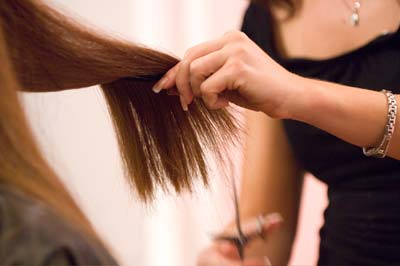
“I need a haircut.”  I announced to no one in particular.  “My hair is looking scraggly around the edges, plus it’s lying too flat, which means I need to trim it up.  Tonight, maybe, before I get in the shower.”source:7beautytips

Mother looked up and rolled her eyes at me.  She and I rarely agree over my hair.  But, that’s nothing new, in fact, that disagreement goes back five decades.

Back to when I was thirteen and got my first glasses.  As I walked home from the Doctor’s office wearing my new glasses, I was so excited that I could actually see.  The individual leaves on the trees; the colors and shapes of flowers across the street and the street signs.  Had our house always been that bright a pink?  That day, I ran inside and headed directly for the bathroom and the mirror.

“Let me see your glasses.”  Mother called from the kitchen.  I closed the bathroom door.  Finally.  I would be able to really see myself.   What I saw horrified me.  I was thirteen, not ten years old, and I didn’t sing and dance, so why did I have Shirley Temple curls?

I had no idea that Mother had bobby pinned curls into place along the top of my head.  There were long curls that hung down to frame my face and more curls that went all around the back of my head.

How could she have done this to me?  There was a pimple on my chin.  Why hadn’t she told me or done something about it?  How could she treat me like a little girl?

I had been betrayed by the one person who was supposed to be on my side; the one who was supposed to prepare me for life out in the world.  I stood there in shock.  Never again would I trust her with my hair.

I found her in the kitchen fixing dinner.  The smell of pinto beans that had been simmering all day mingled with the heat of hot cornbread and made my stomach growl.

“Set the table.”  She said.  “Dinner’s nearly ready.”

I moved around her to get to the silverware drawer.  Her brown hair was combed into brushed out curls that framed her head and ended just below her ears.  She was thirty-six and slim and trim in a sleeveless shirt and petal pushers.  Her skin was tanned from spending afternoons in the vegetable garden out back.  She had the record player on and “The Girl From Ipanema” fit the moment perfectly.

“Tall and tan and young and lovely, the girl from Ipanema goes walking.”

Why hadn’t she seen how ridiculous I looked?  Wasn’t it part of her job to get me ready to be the girl from Ipanema?  Instead I felt ugly and hopeless.

I had to take charge of my looks.  And, I had to tread softly because her feelings were fragile.  Plus, Daddy was her biggest supporter, so this had to be handled carefully.

“I’m going to do my own hair tonight.”  I said.  She turned to look at me, her face flushed from the heat that poured off the brewed tea she was pouring into the pitcher to make sweetened tea.

“Really?”  She looked at me and at my hair critically.  “You brushed out your curls.”

“Mother.  I’m thirteen.  Don’t you think I should start doing my own hair?”

She looked a little taken back by that but frazzled enough with getting dinner on the table that she didn’t argue.  The back door slammed and the light green kitchen and dining room with their cream and brown colored vinyl floors were filled with my Dad, my sister and my two brothers.

“Got your glasses, didn’t you, Sugar?”  Daddy smiled at me through his glasses, the look of total love and support in his eyes.  I was still his little girl, but somehow that was different.  I smiled back at him and moved on to the table and laid out the silverware.  It was noisy with all the bustling around, hands were washed, food was put on the table and finally, everyone took a seat.  The subject of hair didn’t come up.  I breathed a sigh of relief.

Four years after the Shirley Temple curls, Mother had been asking me the same question for months, “Why don’t we put a perm in your hair?”  My straight, fine hair took a lot of coaxing, teasing and spraying every day to get it to look like the First Lady, Jackie’s, hair.  Mother was sure a home perm was the answer.  I must have forgotten my pledge to never trust her with my hair, because I finally agreed.

“Oh, honey.  I’m sorry.”  She said as she unwound the rollers.  My stomach was in knots as I made my way to bathroom mirror.  She had done it to me again.  Ruined me for public life.  “Serves you right,” I whispered to myself in the mirror, “you shouldn’t have listened to her.”  The last of my Afro (ten years before that style was popular) was trimmed off a full year later.

Then during summer vacation in my college years, I came home and the first thing Mother said to me was, “We need to do something with your hair, honey.”  She fussed and worried about my hair all that summer.  Had she forgotten the perm?  I hadn’t.  Nor had I forgotten those Shirley Temple curls.

“No, thank you.  I’m fine, Mother.  I’ll take care of my own hair.”  Through the years, she was always ready with a solution.  I stayed on the offensive.  She never touched my hair again.  I wasn’t happy that I couldn’t trust her.  It made me tired to always be on the offensive.  I didn’t want to be the adult to my own Mother.  It would be so nice for someone to take care of me, to let me give up the burden of doing it all myself.  I didn’t see that I had any choice, though, so I stayed strong in my resolve to take care of my own hair and little by little I learned to like who I was, even with my fine, limp hair.

Now, I leave the bathroom, fresh from a shower, my hair trimmed up.  In the dining room Mother sits dozing in her spot at the dining room table.  At 85 years old, she’s wrapped in a sweater and a lap blanket to help keep her warm, even in the heat of summer.

She looks up at me, groggy, and says, “You cut your hair again?  It was just starting to look nice.”

There was a time when I argued with her or tried to make her understand my choices, but I like me and I’ve finally learned we won’t ever agree on this subject.  I smile and don’t even feel irritated.

“Yes, Mother, I just cut it and I like it.”