The do…

image source:picsbox

image source:picsbox

I wonder if we choose
cadillac shine with fingers to the keys and
synapsis firing
or do the pistons lift and fall to the unseen?

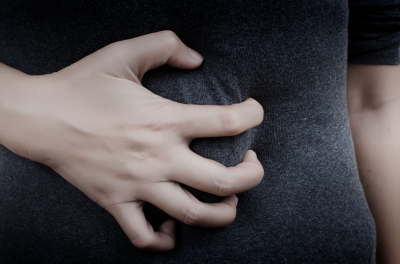
Fingers filled and colored bright        glued           stationary
where they   float   push    pull
GRASP             reach   tug      despair
d

r

o

w

n.

How they soar to the music and bleed into the camera,
emerge, wholly frac  tured.

I try to wrap my head around that beauty, that strange
drama of pain, fulfillment, Joy.  Driven determination.

They leech into my sleep.
Dreams skate across the wrinkled blanket and
fall into the abyss of sweet and fearful.

“Like a sparrow in his flitting, like a swallow in its flying,
a curse that is causeless does not alight.”

Proverbial sight pierces dark.  Not proverbial until birthed,
right?  I mean, the proverb started somewhere, get it?

Begin the beguine, trip the light fantastic
right down to the drive, the sit, the start, the do, the do, the do.

Was that really so hard?  The barrier releases and the flood
bursts
OR trickles, trickles, trickles,
rains, splatters, downpours, floods;

OUT they spit, the letters, the a, the c, the qu, the z
after one, two, three   Squat.

So, if outside, implore;
if inside, explore
else denying dry DIE crackle and Never have life.

fly high…and sing your song…

image source:Bing images

image source:Bing images

We lost another one this week.  That makes two in the last eight days.  First, Bob, then Charmaine.  Elderly, frail friends of Mother’s.

People she knew for nearly forty years from church.  People, who were hardy, still working with busy productive lives when she and Daddy first met them.  People, whose lives morphed and changed into retirement, followed by the death of spouses and the total rearrangement of how they lived; people, who once self-reliant, at the end, relied upon others.

Mother hasn’t been feeling well, so I told her the news carefully.  She seemed to take it in stride as part of the everyday markers of her elderly life.  After all, Daddy’s gone too, and he was her mainstay.

Charmaine and Jim retired and moved back to the mid-West to be near their kids.  Maybe ten years ago?  Then Jim got sick and died and Charmaine’s daughter was around to do the caring.  Now Charmaine’s gone.

Bob nursed his ailing wife while he worked full time and then she died.  Mother says he was never the same after those exhausting years.  Is that why Alzheimer’s took over his capable brain?  In the end his daughters had lie to him to get him to leave the house so that they could get him care.  Bob’s gone now, too.

A flurry of birds in the backyard catches my eye as sparrows dart, flutter, and settle on the grass and the green is painted into a polka dot green blanket with hopping browns and grays.  Today’s sunshine reveals a glitter in the multi-layered hues of their feathers.

Squawk!  A blackbird clutched to a swaying high wire interrupts and the sparrows take chirping flight up into the bare oak branches.  Low to the ground, along the fence perimeter, there’s black fur that moves stealthily.  Feral cat.  Could be that squawk was a warning, right?

image source:Bing images

image source:Bing images

So, those ended elderly lives?  Makes one think; ponder; if you get my drift.  The shortness of their lives doesn’t hold a candle to the song bird, the Cedar Waxwing, trilling on the bare Apricot branches.  Those dudes only live two or three years.  That’s short, my friend.  Or it is when compared to Mother’s eighty-plus-year-old friends that just sang their last, breathed their last.  Well, you get the point.

But, does it seem short to the Cedar Waxwing, or does it seem normal?  They’re born, they’re fed, they learn to eat and to find their own food and water; their instinct keeps them moving ahead, they make music, they make baby birds, they feed them and push them from the nest.  They make more music.  They die.

It’s all perspective.  The light we’re seeing from the stars, by the time it gets to us, those stars have died.  The music of Chopin or Pachelbel, it’s ours because they lived and created, but they’re done now too.  Even so, they left something behind.  So do the stars, so do the Cedar Waxwings.  Their beauty and their songs are captured and saved on YouTube on in some documentary for us to enjoy.

Here’s what keeps crawling around the edges of my mind, “Look at the birds of the sky: They don’t sow or reap or gather into barns, yet your heavenly Father feeds them.  Aren’t you worth more than they?”  That was Matthew, a Jesus follower, noting down his observations of the cycle of the birds in the skies above him over 2,000 years ago in Palestine.

Matthew’s been gone a long time, but he caught the truth and left a record of it for us.  It’s life.  The value of life.  The preciousness of life.  Your life.  My life.  The bird’s life.  Ok, I’ll admit it, as much as I don’t like feral cats, the feral cat’s life, as well.  Life.  We see it replicated from one bird to another; one cat to another, one human to another, but it’s a gift.  Matthew said it was a God given gift.  It is.

image: google images

image source: google images

I see that.  I feel it inside.  I’m aware life is a gift and not something I can make or bring into being.  Nor can I control how long life lasts.  Oh, I suppose I could throw in the towel to my life’s fight and find some way to end it.  The problem is that’s only the life that exists in this earthly world; the one we can see and touch.  But, it’s not the soul.  There’s no ending to the soul.  The soul comes from God and he controls its destiny.  I need to remember to hold it in an open hand, because I can’t control it.  Just like I can’t keep that Cedar Waxwing living on forever nor can I predict how long before Mother loses life.  Her life and soul came from God and back to God she will go.  I will go.  You will go.  Take comfort.  God loves you and the soul he gave you.  Meanwhile, fly high and sing your song.

Wind.Rain.Wild

image source:bing images

image source:bing images

The rushing, bustling, whistling sound in the back corner of the house draws me to the half-window of the back door.  The backyard is soggy.  Two streets over, a lone palm tree, at least twenty feet above rooftops and oak and sycamore and elder trees, sways back and forth, five feet east then five feet west.  East and west, it sways.  Near the top of its long bare trunk, the fronds of its grass skirt are whipped up and down and around in a frenzy dance of wind and rain.

image source:parktography

image source:parktography

On the white wall of the garage, the scarlet blooms and green leaves of the bougainvillea normally stretch wide and high, but this dim morning they droop, weighted by the pelting rain; fat drops gliding the hills and valleys of each bloom and leaf, dropping staccato onto the ground below.

At the side of the garage, that spurt of growth from a seed dropped there by some bird or carried there in the dung of the possum or the feral cats has grown tall.  It seemed like a weed at first; its roots unreachable amid stuff stacked behind the garbage cans, so over the months I whacked away at the sideways shoots until today, what I see out in the storm is a burgundy maple, taller than the garage roof.  It sways just like the nurtured and wanted trees in the yard.

Water has washed the paving stone path from the porch to the garage.  The birdbath is full, its surface dappled with rain drops.  Even the squat, sturdy grapefruit tree, leaves fat and steady, fruit ponderous is swaying.  I see no one.  No person, cat, dog or bird.  They’ve all gone to dry ground somewhere.

image source:bing images

image source:bing images

It’s not unusual to hear predictions of rain that never materialize for us.  It’s not unusual for a breeze to change the sky from clear to muddled clouds, while all remains dry.  It’s not unusual for rain in the hills or along the coast to miss us.  It’s not unusual for those same storms to mean mudslides and damage in other places.  Even so, I’m grateful this little valley that is normally spared wild weather has not been passed by this time.  This wind, this pelting rain, they are rare for us.  Exquisite.

The earth, the grass, the plants, the flowers, the trees; they drink, they are washed.  Dry turns to plump and nourished.  Yellowed winter grass drinks deeply, its tint turning even as I watch.

The wind and the rain and the wild storm remind me of a truth.  Each season returns in its appointed time.  The maker of the wind and the rain began it all and so it continues.  I take comfort and rest.  I smile at the wind and the rain and the wild storm.

image source:Bing images

image source:Bing images

I fill my lungs with washed air.  I drink in the power of the storm.  I open the dry spots of wariness at Mother’s health and find them moistened and soothed.  I feel the deep well of an unknown future start to fill.  I hear the dry crackle stress of hard choices ease into possibility’s supple cloth.  I open my hands and hard tensions untangle.  I watch the hope of a creative spark take nourishment.  I feel the expansion of my spirit.  I embrace the bubbles of joy.  I stretch with energy and settle into hope.  I turn from the window and continue on, cocooned by the rushing, bustling, whistling of the storm.

Method

image source: Bing images

image source: Bing images

Everybody has a method, right?  Like, there’s scientific method and method acting and teachers and doctors have their methods.  Even businesses have their methods.  Well, I can tell you, Granny had her method and her “grandchildren” either learned it or we were gone.

“It’s quite simple, Vanessa,” Granny had a way of making her point clear, especially when she wasn’t looking directly at you.  Her voice cut like steel and ice, “you know what to do and you will do it.”

“She’s not ready, Granny,” I stood behind the younger girl, tying the bow in her hair, “why not let me or Bryan do it?”

“Nonsense,” Granny sorted through the paperwork on her desk, “Vanessa is thirteen.”  Her hand stopped mid-air as she looked over at us.  “At her age, Maggie, you were nearly as good as me,” she turned back to her desk, “We leave in fifteen minutes.  See that you’re ready.”

She was right.  I was good.  I could move through the crowd and people didn’t even know their watch or their wallet or their necklace was missing.  Bryan liked car keys and room keys.  He would wander in and out of the concert or meeting room or lecture hall, a happy grin on his fifteen year old cherubic face and always had a good haul by the time we got back to the house.

“How do you manage to get the right key back to the right person,” I asked?  We headed downstairs to leave for the afternoon lecture to rich patrons on the plight of suffering third-world urchins.

“Dunno.  My brain just remembers,” Bryan looked honest and trustworthy.  No one ever suspected.

Bryan and I had been at this for about five years and we knew the drill.  Granny handed us school books.  We spent our mornings studying.  Granny tested us and accepted nothing but high grades.  Then we practiced our trade.  Granny expected us to excel.  We earned our keep.  Fail at our studies or at our trade meant being locked in our rooms with only bread and water until we got it right.

I looked back up the stairs at Vanessa, who lagged behind, “Come on, it will be ok.”  If my method worked, it would be ok.

***

I had to be quick.  Vanessa looked like Alice down the rabbit hole.  She was pale and stiff as a board.  She’d gone for a wallet and fumbled it.  The old guy turned and saw his wallet on the floor at his feet.  If she caved and tears fell, she’d confess and it would all be over.

I scooped up the wallet, held it out to him and put my arm around Vanessa.

“This must be yours, sir,” I batted my eyes and did my sweetest, friendliest smile, “Vanessa is such a talented artist.  She’s always dreaming and not watching where she’s going.”

He took the wallet, a mixture of doubt and relief on his face.

***

“Fine,” Granny closed the safe and pressed the lever that moved the section of bookcase back in place, concealing the hidden safe.  She came across the Aubusson rug toward us, diamonds at her neck and ears glittering above her white ermine stole.

“I’ll give you more time to work with Vanessa,” she moved up the walnut circular staircase.

I squeezed Vanessa’s arm and smiled at her.

“But know this,” Granny turned at the top of the stairs to look at us, her eyes scathing, “I don’t need worthless orphans who can’t do their job.”

***

We couldn’t only work Granny’s rich society functions.  It brought in good hauls but it’d be too suspicious to just hit them, so Bryan and I worked the crowds at Grand Central, along Wall Street and the subways most afternoons.  We dressed for these gigs in jeans and t-shirts and could move in and out of the bustling corporate types and do pretty well, although not that many people carried cash these days.  Didn’t matter much.  Granny had contacts to move the iPhones and iPads, whatever we picked up.

It was my idea to set Vanessa up with an easel for her ink drawings.  She’d sit on a wall or bench, an art box at her feet and earn a few dollars while she drew.  Granny wasn’t thrilled, but at least Vanessa was worth something.  I knew Granny was cutting me some slack because I’d worked hard and earned her respect.  Even so, Vanessa’s failure to pick-pocket wouldn’t be tolerated much longer.  If all went well with my method, it wouldn’t matter.

I had my eye on a girl about Vanessa’s age that I’d seen several times.  She looked pretty rough.  Dirty clothes, hair not washed much, but her face was clean, she had a great smile and she moved liked lightning.  I started bringing an extra sandwich.  Granny penny-pinched on our food and we weren’t to spend any of our haul.  Bryan would grab a sandwich off a stall once in a while, but most of the vendors dished up what people wanted and it would cause too much attention to steal from them.

“Got an extra sandwich,” I moved up behind the dirty street girl just as she started to brush against a guy wearing a Rolex, “wanna take a break?”

***

It took several weeks of finding her daily and being friendly until she was comfortable.  Jasmine was her street name.  The way she said it, I was pretty sure she’d chosen it herself.

It didn’t take much to convince Bryan we could use another fast hand.  He liked the idea of keeping Granny happy and off our backs.  A happy Granny meant more perks for us.  We’d done well enough last year that Granny took a vacation in the Bahamas, where we picked-up another haul but also got to swim and deep-sea dive.

“How’d you like three squares, new clothes, a hot bath and your own room?”  I took a bite of sandwich and watched Jasmine’s face.

***

It was a risk bringing Jasmine back to the house.  I had to promise her part of my next day’s haul if it didn’t work out after she showed her haul to Granny.  But if Granny liked her, she’d trade sleeping on the street and the few bucks she was getting at pawn shops for a comfortable life.

I could tell Granny was impressed with Jasmine’s haul.  It was about the same as mine for the afternoon and more than Bryan’s.  Granny and Jasmine sized each other up.  Granny had her walk around the room while she asked her questions, mostly I think, to hear how Jasmine talked.  Without taking her eyes off Jasmine, Granny said,

“It will be up to you, Maggie, to see she is ready for the opera at the end of the month.”

I grinned at Jasmine.  “You’re in,” I whispered as we left Granny’s library and headed upstairs to show Jasmine her room.

I worked hard with Jasmine.  Mornings, how to talk and what to say in the ritzy crowd; making sure she knew how to get clean, do her hair and choose appropriate clothing; plus, intense tutoring in the school books, all the while telling her about the trips, the perks, the pay-off for doing it all well.  She was sharp and caught on fast.

Afternoons and the 5-7 pm rush hour, we were back on the streets.  Jasmine moved even faster and was less noticeable now that she was clean and had fresh clothes.  She flashed that big smile and people didn’t suspect a thing.  Granny’s wariness began to fade, though her eagle eye missed nothing.

We made it through the opera night without a hitch and an even bigger haul with Jasmine along.  Granny was pleased.  Her eye began to linger on Vanessa.  I knew what she was thinking.  She’d have to spend money on art training to get Vanessa’s skill to bring in a good return.  Was Vanessa’s talent worth the years, the effort and the money it would take?  If she decided no, then Vanessa would disappear.  I’d seen two other girls disappear over the years.  I never knew what happened to them.

It was time to put the next part of my method into action.

We hit the streets about 8 a.m. that Saturday.  Jasmine and Bryan moved off into the crowd.  Vanessa was about to set up on a bench when I took her arm and hurried her down the street.  A four block walk and we were at Penn Station.  I lifted a wallet off a woman and dug out enough cash to buy two tickets to Philadelphia.

“Where are we going?”  Vanessa asked as we found seats.  She hugged her art box to her chest and looked shaky.  The only times we left the City, we were in Granny’s limo.

“Do you trust me?”  I looked into her eyes.  She nodded.  I opened my book bag and showed her my wad of cash.  Her eyes got round as saucers.

“Granny is not going to like this,” she said.

“I’ve been putting a few dollars away every day for a long time.”  I closed the book bag and wrapped my arms around it, just like any other student on the train.  “Granny’s not the only one who has hiding places.”

“You were four and I was eight when they separated us and sent us to different children’s homes,” I reached for her hand.  “It took me over a year to find you using Granny’s contacts.  I’m not going to lose you now.”

She looked puzzled.

“You’re my sister, Iris,” my voice went gruff over the frog in my throat, “and no one is going to keep us apart again.”

“Iris.  No one’s called me by my middle name since my Mama died.”  She stared at me.  “I had a sister.  Mags.”

“You have a sister, Iris.  I’m Mags.  Maggie.”

Her eyes got round again and, as I knew they would, tears came.  We reached for each other and held on tight.

We don’t live in paradise….

The sounds coming from the bathroom are not pretty.                   Chugging splats                       bubble,

image source:Bing images

image source:Bing images

plink.
Groan, spray filtering.
The rustle
wait
bustle              wait.
Bemoan;
the whine is wallpapered, stiff and melting.
The smell, oh the smell.
Bemused gave off the bewildering.
Resolve flushed.
Can’t.  No, can’t.

Mother, with great sighs, slowly makes her way into her bedroom and shuts the door.  In my bedroom, pale light filters through the wood blinds on donkey my window.  Gentle, not too bright ribbon.

I lie on the bed, under blue weed covers.  I was sleeping but now that’s gone.  My brain buzzes.  Fine.  So don’t do it.  It’s her decision.  The can’t lets the air out of the balloon to a slow relaxation for her but now I’m wound up.

image source:google images

image source:google images

What’s next?  What to do after that can’t?  Her stress floated down the hall and settled on me.  Too much to think about.  Too much to query to God.  I need some wisdom here, because this impasse is looming large on the horizon, if you get my drift.

The house has gone quiet.  My black sleeping mask is in my hand instead of on my face.  All is still.  Except the racing thought trails of my mind, up over mountains of possibilities down into ditches of nasty consequences of seemingly innocent choices.  It’s all food, right?  What’s the big harm here?  Well, that is the question, isn’t it?

image source:Bing images

image source:Bing images

Pick your poison, Ma’am.  Step right up into the parlor of innocent nutrients.  FDA approved, so what could possibly be harmful?  It’s the amazing machine of the intricate mysterious inner workings of the human body.  Absorb this.  Slough off that.  Change, swish, chug, mutilate, smash, transform, squash, mutate, evolve, utilize, reject and package into that passenger train of garbage that came in and is now garbage headed out.

I know what I’d do if it were me.  Identify the perpetrators and stop giving them admittance.  Mother can’t seem to understand that concept.  It’s food.  It’s her favorite foods.  How could they possibly be causing these difficulties, these distresses?

There’s a straight line connection, but she can’t see it.  What a relief it would be if that connection didn’t exist.  I’d take that world.

image source:Bing images

image source:Bing images

Imagine what it would be like if Adam and Eve hadn’t eaten that apple?  Hadn’t decided they wanted the job of god in their lives?  Everything was perfect before that, so we’re told.  It’s hard to imagine a world where there’d be no decay, no disease, no killing, no hatred, no suffering.

No acid reflux, no food sensitivities, no teeth that break off and require oral surgery.  Sounds like paradise, to me.

Oh well, reality beckons.  We don’t live in paradise.

I don’t know what to do for her, God.  At least you know the body you made and just ‘cause bodies get faulty, you don’t.  My stress ebbs away and I sleep again.  Cell phone vibration and ring-tone startle me awake.  I fish the phone out from under my pillow.  An 800 number.  Not answering that.

No point is lying here.  Might as well see if I can print up a list of foods that won’t aggravate Mother’s GERD.  Maybe she’ll react better to the CANs instead of the CAN’Ts.  Thanks, God.  That dozing helped.  I feel a little closer to paradise.  Amazing what rest can do.

Nuts

image source:Bing images

image source:Bing images

Crunch

cracks

and breaks the

nuts

That bounce in

further splinter,

hard frozen wholes to

Slivers and bites minuscule.

Exchange

from big Full

to tiny small.

I keep losing them, one at a time.  Oh not so many, just a few, you understand, but over the days and weeks and months, it could add up.  I drop one, it bounces out of sight into…Never-never land?  Yesterday, I leaned over the desk chasing the end of a computer power cord and there, on the painted hardwoods, between the edge of the Persian rug wannabe and the tall baseboards, there they were.  Nuts.  Some whole, some ground to bits.  A mouse could live royally behind my desk.

Chartreuse and Blood

image source: Bing images

image source: Bing images

Violins quiver, bows strike, pull, push, strings pulsate to the beat of the harpsichord’s twang.  Shadows dance round and round, through the center, along the perimeter, hoop skirts flounce, tails sail, the light shimmers between the folds of the curtains, around the length of the arms that encircle one another in the proper mating dance.  The pace quickens, the dancers pin ball across the room; my watching mind and eyes driven by the whirling dervish of non-stop violin and harpsichord, all treble clef sixteenth notes.

Ah, the musicians have moved on to flute, violin and harpsichord.  Lovely.  And some eighth notes.

Thank goodness.  The pace on the first piece was non-stop into drivel, pounding away at the ears, pounding away at the brain, pounding away at the muscles, pounding away into foot tapping, pounding away into pulses that fire the fingers into hard pounding, pounding away on all the wrong keys.

Violin answers violin, violin dances in partnership with violin, flute leads violin, violins join to follow, they sway from treble clef to bass clef and the ears are happy to have some deeper sound, if you get my drift.  All those high notes can get to you after a while, right?  Add some bass and basso profondo and give the ears a break, why don’tcha?

The light trilling of the high flute is airy and dainty, skipping across meadows searching for a perch, while the contra-alto flute is sorrow and depth and longing and hunger fed by its miseries, its moves more ponderous; its expressions richer.  Together they plumb the heights and depths of emotions buried yet cascading to the surface in an upward belch of beauty.

My eyes are drawn to the inner door opening.  An overweight woman comes through the doorway, makes her way stiffly to the outside door, opens the door and leaves.

The spell is broken.  I pull out my ear-buds and lose Bach and the orchestra.

image source:Bing images

image source:Bing images

The ballroom with its dancers is replaced with this waiting room, old asbestos twelve-inch, off-white floor tiles polished to a bright shine, plastic molded chairs in chartreuse with a slight dip to the seat and curve to the back, in the same shade of chartreuse as the freshly painted walls contrasting to the white counters and paperwork.  Unusual to be in a waiting room where there are only two décor colors.  No framed pictures of flowers or meadows or mountains.  The only things on the walls are the posters touting the benefits of regular doctor care and employer minimum wage requirements.  They’re white with black print readable only up close.  From a distance, they make their own type wall decoration.  I’ve noticed of late that many doctors’ offices have no magazines, in fact, no reading material at all, in their waiting rooms.  Good thing I brought my iPod for listening.

I put the ear-buds back in and Bach returns.  I close my eyes and instead of ballrooms and dancers, I see the reason people are here, the reason people disappear into the inner door, the reason the nurses go through paperwork and the reason they call people’s names and the reason for all the chartreuse and white.

image source:Bing

image source:Bing

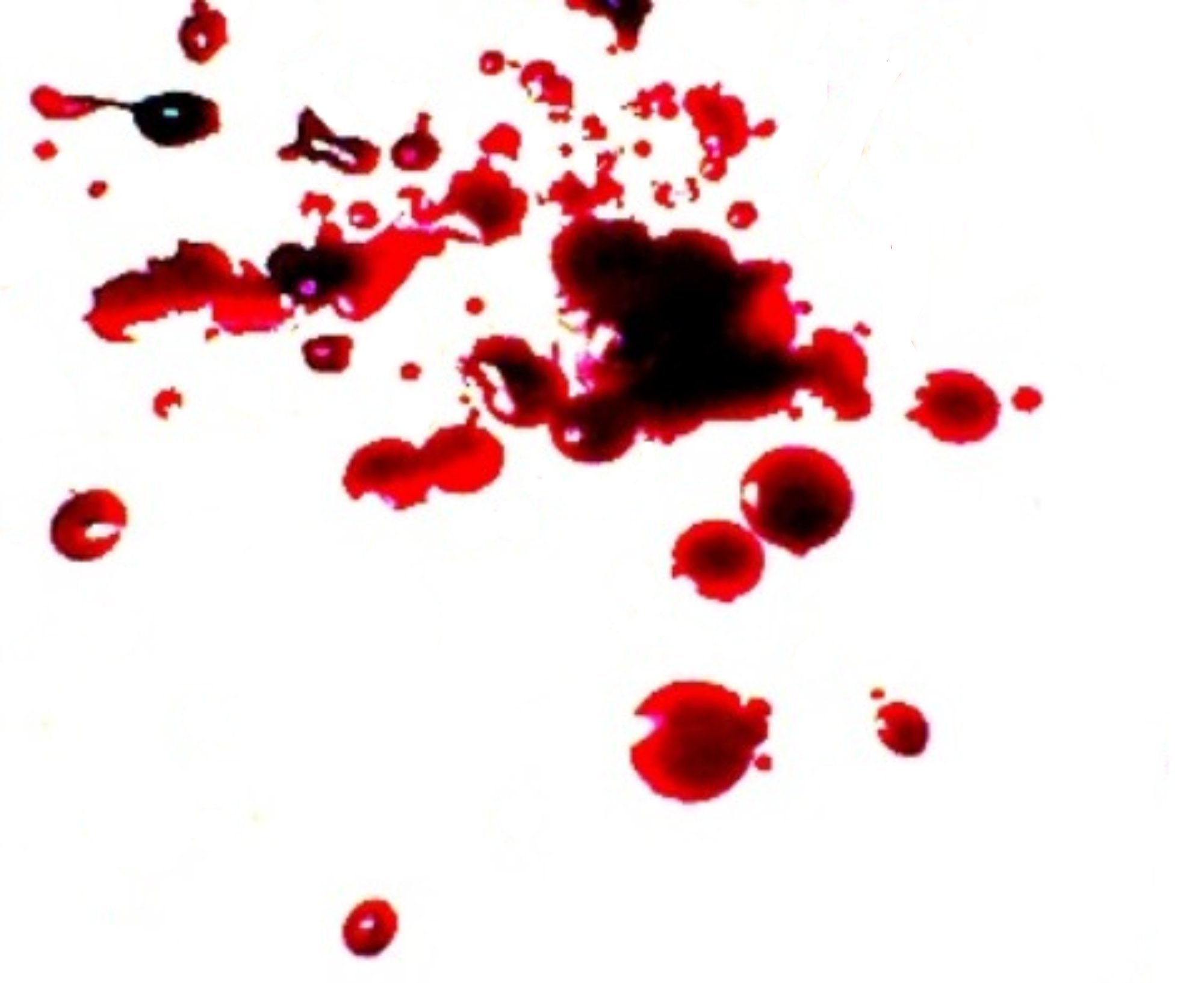
It’s to camouflage the red that flows behind that inner door; the red that’s collected through sharps into small vials with rubber stoppers, the red that will be centrifuged, the red that will be shipped and messengered, the red that could result in bad news, and tears, and fear, and dread; the red that could result in no news because no news is good news, right?

The harpsichord and violin soar and the red flies upward, painting the chartreuse with dots, with streams, with puddles, with cascades, with spurts, with fountains.  It bounces with each note, settles in the rests, spins with the flute, sprays on the crescendo and with the retard of the last bar, coalesces back into the vials and pulls on the rubber stopper hats.

“Ready to go?”

My eyes open.  My friend is standing in front of me, a wad of cotton under a piece of tape on the inside crook of her arm so that no more of her red escapes.  I’m only here as designated driver.  My red is safe.  I’m happy to exit the chartreuse and white, to leave the collected red behind.  I know one day I’ll have to give up my red, but not today.  Today, I escape.

Carry on……

image source:google images

image source:google images

The cuckoo clock ticks.  The floors creak with the slow movement of the elderly woman traversing the length of the living room and the dining room, cane maneuvered by one hand, the other hand holding the day’s newspaper, just retrieved from the front step.

Great hall height     BUMBLING                  forward                inside all the way              to cake breakfast            before        drop         eyelids               into    the deep.         Being      of course,         is perfectly soluble          fight and fought             fraught?               Bought for naught? While I              DANCE                tripp ingly                        two sides                                              that’s                       understood,
or                                   should be,

if you get my drift.   I read just the other day, somewhere, or maybe I heard it?  Well, I won’t bore you with the how or the why, but you follow what I’m saying.

It was like, the time comes when the young take up the cause left behind by the old.  Something close to that.  Oh, maybe, the time comes when the old give up their cause to the young.  Yeah, I think that’s was it.  The time comes when the old give up their cause to the young.

Souls fly higher daily, skin thinned into translucence; some march straight ahead to the edge of the cliff and step out into air; some slow until inert stasis is the wall paper of their last days; some push against dread and fear; some laugh and joy in the legacy they’ve built; some writhe deep in pain and suffer the sloughing of the dying flesh; some faces light with the promise of more life to come; some pull the trigger in search of false relief.

I hear Mother coming; her cane clunking.  My mind flies to memories treasured.  I hover, chose and settle in to enjoy.

“Decaf?”  The waitress sets a glass of water and a napkin wrapped knife, fork and spoon on the table.

Crile R Dean

Crile R Dean

His solid but not overweight figure sits tall against the back of the booth, his hair white, every hair combed into place;  his eyes bright, a smile on his face, his cream colored, short sleeved, button-up shirt and brown slacks, not new but clean; his walking shoes a little scuffed.

The diner is clean, if well worn.  Much used faded counters nicked and scarred, brown booth seats with a sag here and there, wood chair legs nicked, metal table stands marked where decades of shoes kicked or rested.  Some faint muzac plays overhead.  People chat, waitresses weave in and out of the tables, arms laden; people eat.  It is a little cooler in the middle of the room and warmer in the booths against the east windows, their shades angled to keep the sun out of the eyes of patrons.

He isn’t cold.  His morning three mile walk has warmed him and built his appetite.

“No decaf, high octane,” he hands a menu back to the waitress, “bring me the Grand Slam; eggs fried.  Bacon and sausage.”

“Syrup or jelly for the pancakes?”  She writes on her order pad.

“Both.  And toast.  Add toast.”  He smiles again.

In my mind I walk into that diner and sit across from him.  His eyes light with love and joy at seeing me.  I hand him a wrapped box with a bow and a tag, Happy Eight-Eighth Birthday, Daddy.  His grin is awkward.

“You didn’t need to do this,” he pulls off the bow and peels off the paper.

I smile at the memory of his strength, his stamina, his love for life, his drive to make a difference in his world, his sharp grasp of things political, sociological and spiritual.  His ability to still lift the hedge trimmer and the edger and to navigate the lawn mower.  His confidence that still sent him onto the garage roof to trim a dead plum tree limb and God’s grace that urged him safely back to the ground just minutes before a 4.2 on the Richter scale hit.  He was fearless and bold.  Even at eighty-eight.  Mother called it reckless and foolish.

I hang on to the scenes of his life, vitality and joy.  They weren’t our last scenes.  Those were hospice and changing diapers and giving morphine and a skeleton pushing through translucent, whisper weight skin.  I skim past those and hang on to a truth.  Those last days were just the cocoon breaking open, setting his soul free.

I miss him.  I ache.  I cry.  I smile at his silly sense of humor.  I breathe in the certainly he’s there waiting for me; in eternity with the Creator.

Mother has made it at last to the kitchen.  I turn to her,

“Morning, Mother,” I smile.  Daddy and Mother were like night and day together.  Being here with her and remembering him, I see the differences no longer matter.  Daddy lived his beliefs and then he gave up his cause to the young.  Mother is nearly there.

My journey continues.  I have a choice.  I begrudge the time I no longer have with Daddy.  I get irritated at the task of being with Mother.  I watch any brighter, bigger purpose and meaning shrivel up while I trudge through the mundane.  I feel myself drowning.

image source:blingee

image source:blingee

I reach for a lifeline and I’m pulled up to keep walking, to take the steps onward.  I take heart from Daddy’s life.  I slough off the dread, the weight of unfulfilled expectations.  I let go of the hurts, imagined or real.  I remember the love, I remember the promise of eternity.  I believe.  I carry my cause, forged in the smelt of their influence, with honor.  I’ll keep on, until it’s my turn to leave a cause for the young to carry.

Trailing clouds of glory…

image source:google images

image source:google images

Seventy-five degrees, blue skies, birds twittering their songs in the trees with leaves swaying in the breeze, it’s a perfect Southern California fall day.

I go out and put water in the flower petal shaped birdbath for Mother since she hasn’t been feeling well.  She loves being outside, keeping the bird bath clean and filled with fresh water, but she’s out less and less these days.  Anyway, I add fresh water to it, right?  And above me, somewhere in the long, leafy branches of the apricot tree, a bird starts putting up a racket.  And I do mean racket, if you get my drift.

It’s a funny sound for a medium sized bird with red on the top of the head, a white throat, gray chest and black wings.

“Quack.  Quack.  Quack.”  Or if you prefer, Wikipedia says, “waaka, waaka, waaka.”  Sounds like “quack” to me.

I come back inside and the silly bird gets louder and louder.  The next time I look there are three of them at the bird bath.  Acorn Woodpeckers, so Mother says.

“Do you think that bird called his family to tell them there’s water in the birdbath?”  I ask.

Mother makes her way over to the kitchen window, her cane clunking right along with the quacking outside the open window.  Plunk, quack.  Plunk, quack.  Plunk, quack.

“Maybe so,” Mother says, “I’ve seen four of them at the birdbath, and two are young ones.”

They fly before long but the yard, which had been quiet until I turned on the water, is now filled with Sparrows and Finches poking around in the grass and there’s a busy squirrel moving up and down the fat, old trunk of the Apricot.

The quiet and the still has been replaced with chitter-chatter and an infinitesimal undulation of teeming life.  Bees and Hummingbirds vie for the prominent spot at the feeder; flies flit, butterflies dip and sway, ants march along the path, spiders swing on invisible threads and over the fence, the neighbor’s dog yaps.

Sunday afternoons have always meant no pressure to accomplish anything of significance and so I sit on the wooden bench rocker with the sun warming the top of my head and my skin.  The birds were startled when I came out, but the longer I sit still all the movement in the yard, trees and bushes returns.  I’m drowsy in the sun.  A kite floats overhead, its tail trailing just above the fence.  I reach up and catch the tip and am aloft.  As I look down, our patch of green shrinks until it’s just a tiny dot in the middle of the curvature of the horizon.

I see now how infinitesimal my grasp on life has been.  How small my dreams that only lived among the known heights and depths of what I could see and touch and hear and taste.  This blue ball in the swirling black expanse studded with twinkling dots is but a speck in all the universes that stretch to infinity and on and on.

I must go higher.  I urge to go higher but I am impotent as my balloon has no inertial dampeners, no life support, no sublight engines.

I lose height.  I float downward; the dots of green, the dark of mountains, the blue of the ocean, the black of its buried depths rush towards me; the tip of skyscrapers fly past and become giants once again.  I recognize the Apricot branches and aim for the back yard rocker where this trip started.

I’ve seen the heights, so what will change?  What will I believe?  What will drive me on through each day now that I know the truth?  Will I be satisfied again with being comfortable when someone else needs food or clothing or comfort?

No.  I cannot be happy with just getting by when unknown possibilities are there for the nurturing.  I cannot be buried with the stress of the temporariness of an aging body, a dying world.  I cannot allow the stresses and concerns of the tangible consume all my time and effort.  My thoughts flit back to the vastness of space and time.  There’s more; there’s a universe more; seek it, reach for it.  I find myself agreeing with Wordsworth,

“Our birth is but a sleep and a forgetting:
The Soul that rises with us, our life’s Star,
Hath had elsewhere its setting,
And cometh from afar:
Not in entire forgetfulness,
And not in utter nakedness,
But trailing clouds of glory
Do we come From God, who is our home:”

Freeze

image: lionheartherbs

image: lionheartherbs

Impossibly blue.  Blue that runs in rivulets, coursing from east to west in a great splash of vibrancy that covers every pin-prick, every divot, every crease in the old, chipped, and here and there, crumbling plaster walls.  The blue bleeds into the carpet where the walls touch the floor and seeps into the dirty, dusty old fibers like the coursing in of the tide until it reaches where I stand and begins to paint my toes, creeping up.

I’m very curious.  What will this blue do?  I have no idea where it will stop.  Will it mingle with the blood in my veins that give hints of bluish lines under the skin?  I’m not sure I want to change all of my tint.  What if it covers so well that those varicose vein spots of dark blue spread and cover up the rest of my skin color?  I am breathless.  I gulp.  I’ll be a walking Blue Woman.

How do they breathe?  How will I catch and hold to life if all my pores are mucked tight in slime that shines so bright I’ve become flashing neon?  Why, they could paint adverts on me and make a dime perhaps.

I’m struck suddenly with a worse scenario that grabs tighter at my lungs and leaves me deep sucking for air.  I might just blend into the walls and carpet and sky and vast eternity where unseen I will be lost to float without notice amid the halls of time, perhaps bouncing erratically through hazy dimensions, mossy and mysterious, ever seeking, ever yearning, ever longing to find permanence, to stand-out, to have some effect, to leave behind a tombstone written with words of wit and wisdom beyond the simple description, She Was Blue.

Not that blue per se is bad.  Blue is the color of a clear sky, the color of the notes of a jazz horn, the color of an ink, the color that happily announces the birth of a baby boy.

The clunk-splat sound of the paint brush hitting the tipped over paint-can brings me back to the bedroom painting project.  Two and a half walls done, two and a half to go.

I stand in the center of the room, no make-up, hair pulled up in a sloppy pony-tail, the nose piece of the protective glasses irritating the side of my nose, wearing paint-stained cut-offs and one of Sam’s old tee shirts, the ancient carpeting serving as a drop-cloth, the used-up can of paint at my feet, and in my ear, the ipod sound of the weather report of another blast of frozen Arctic Air that is turning everywhere in the United States, except us here in the far western states, blue with cold. I grab a paper towel, wipe the dot of blue off my big toe and reach for a new can of paint.

“Hey,” Sam comes through the open door, briefcase still in one hand, “you went with blue.”

He walks to my side, leans his head to mine and gives me a peck on the cheek, making sure to get nowhere near the paint stained shirt, “Does that mean it’s a boy?”

“Time will tell,” I smile and concentrate on prying the lid off the new paint can.  If I look too long in his eyes, he’ll see into my blue morass.

“I love how brave you are,” he says, walking back to the door, “giving up your meds so our baby will be healthy.  I knew you could do it,” he smiles, pulls off his tie and leaves the room.

I stir the paint, pick up the brush and start painting.  The frozen blue ice in the can melts into blue paint as it meets the wall.