Security Systems

image:allservicesspecialists

image:allservicesspecialists

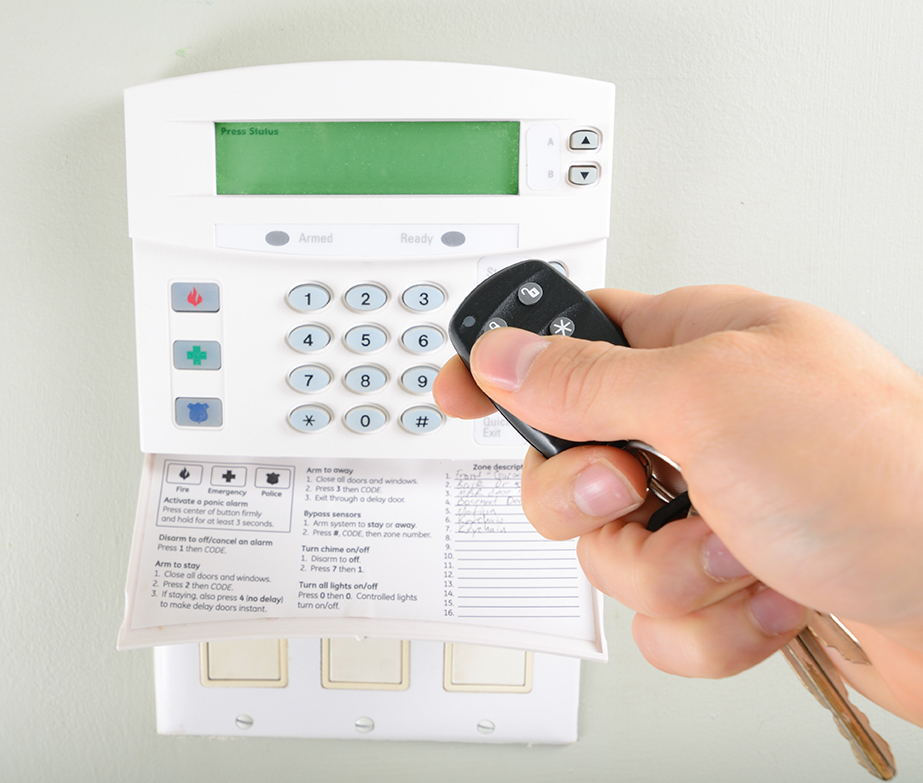
The kid that knocked on the front door yesterday afternoon knew his stuff.  The hook to his pitch drew me in immediately.

“If we choose your house as tester for our security system, we won’t charge you for the service.”

I decided to hear him out rather than just give the standard brush off of “no thanks, we’re not interested” used when any door to door or phone salesperson called.

Behind me, mother sat next to the dining room table, her feet soaking in a tub of hot, soapy water, her toes being softened up so that she could cut the nails.  She’d taken off her red twill pants as the pant legs couldn’t be rolled up easily and had draped a dark green bath towel over her bare thighs.  This was her quarterly routine, or maybe bi-annually, if she wasn’t very motivated and the toenails could wait on their trimming.  She’d gotten cold sitting there, watching TV, waiting on the softening process and had just asked me to take her the red sweater she left on her regular chair on the other side of the dining table.  She looked rather festive: red sweater, green towel, bare calves above the blue tub where her feet were covered with bubbles, nail clippers at the ready on the table next to her, her hair freshly washed and curled and styled.

The kid at the door asked if there was somewhere we could sit and talk and I suggested the three foot high wide wall around the porch.  I unlocked the wrought iron security screen door and headed outside.

“What’s going on?”  Mother called, a frown between her eyes.

I waved at her and closed the door behind me and went to sit on the porch wall to listen to a sales pitch.  It was interesting watching and listening to the young guy, early twenties, dark skinned; I would have said black, but his last name was Ramirez, so I guessed he was some combination of Black and Hispanic; he knew his info and did a good job of telling me about it rather than just reciting some script.  He’d break grammar rules every now and then and also threw in some expressions that he was familiar with that definitely placed him in the millennial generation.  It was like watching and interacting with someone who spoke the same language but with a different dialect; after all, I am from a half a century before that generation.

He had several good points and whoever had trained him had a nice grasp of successful sales.  Ask the questions that get the potential buyer to acknowledge their own need and then show them how that need can be fulfilled.  I recognized the technique from my days as a Realtor as one half my brain critiqued his method and ability and the other half thought about what we could get for nothing just for sticking a sign in the yard and the agreement to use our name as a reference.

Mother was elderly; I did need to leave her alone from time to time; she was a worrier over safely as she followed behind me to make sure doors and windows were locked; it was possible that a medical emergency could occur while I was away or even when I was in the house but unaware that she’d fallen in the garden; and yes, we did live just a few houses away from an area that was seeing an increase in crime, so, it was true we would benefit from the security system; and yes, they would cover the monthly monitoring fee, the installation fee and the cost of the wireless equipment.  The only catch was that we would have to pay the monthly fee of $12 a week that the company passed on to the local authorities for ambulance, fire, and police response.  $12 a week.  Didn’t sound like much, $48 a month.  It would be a squeeze to fit it in the budget, but still, it was a great bargain and it should bring Mother some sense of security and alleviate my concern whenever I’m away.  I was sold.  It would be worth the cost.

“I need to discuss this with my Mother before I commit.”  I said.  “This is her house and her money and she needs time to think about this.”  All true, but the reality is I manage the money and the bills and if I felt we could cover something we wanted or needed, Mother generally deferred to my judgment.  Still, I wouldn’t make the decision without talking to her, not to mention I’d learned the cooling off period before signing on the dotted line was generally a wise idea.

We said our goodbyes, he went on to other appointments and agreed to return in a couple of hours and I went back inside.

image:stepbystep

image:stepbystep

“Now tell me what that was all about.”  Mother had just about finished trimming her toenails and was drying her feet and moaning over the pain in her back caused by bending over the tub of water.

I took a deep breath and launched into a detailed description of the system and how we would benefit if anyone broke in or if she had a medical emergency; my mouth moving, words coming out, while my brain was thinking: this thing has to be armed which will confuse Mother and if it goes off and she doesn’t respond to the voice activated intercom call from the monitoring company, they’ll send fire and police out and we’ll be charged if there’s not a real emergency.

“How will we afford it?”  She said, putting her red twill pants and black sandals back on.  “Can’t we get a medical alert for less than that all by itself?”

“Possibly.”  I said as I dumped out the tub of soapy water into the toilet in her bathroom and watched the water slush and gurgle down the drain, a nagging sense of pressure building at adding another bill to the monthly budget.  $12 a week, 52 weeks a year, divided by 12 months and, suddenly that $12 became $52 a month; beyond  our budget; beyond the resources of Mother’s retirement money unless we cut something else out.

Mother’s cane cloncked across the floor as she moved to her regular spot at the dining room table, sat down and unmuted the TV, her attention back on the screen and off any discussion of a security system.

Ok, God.  Do we need this thing?  We’ve lived this long knowing that you’re in control and have got our backs.  Besides, I have no idea how long Mother will live, what her health issues will be.  Do I need to stress over adding another bill to the budget?
image: google images

image source: google images

And just like that, the excitement over the thought of something for not much cost and the building dread over another bill faded away and in its place a peace floated down and reminded me that we’re ok just like we are.  God loves us and watches out for us.  I breathed in and out and smiled and headed to the kitchen to put dinner on the table.  Thank you, God, for cooling off periods.

Juggling

Today my brother got inside one of my rentals in Nashville.  Finally – after weeks of my trying to coordinate schedules between him and the tenant.  He does his best to look after things since I’m not there much these days and I’m grateful for his willingness to help, to be my onsite eyes.  I know it’s a frustration to him to have to work with a constantly moving target and it’s a frustration to the tenant to know that her life will be disrupted for those few minutes.

Two thousand miles to the west, out the curving highway that pushes its way through the verdant, lush, rolling hills of Tennessee, through green valleys and mountains of central Arkansas, across the grass plains of Oklahoma, north and up and over its western mountains, ever gaining height to the magnificent peaks of Colorado; then descending from their heavenly aeries down into the high desert of New Mexico, the summer heat in an impossibly blue sky brewing huge billows of white that erupt in lighting and thunder and water that kisses the sage and pinon pine so that they live another year; the highway rolls on, slowly loosing height in Arizona as it skirts the deep ravine that is the Grand Canyon, moving on to travel south of the lower tip of Nevada to snake below sea level across the California desert until it reaches its destination in the Pomona Valley, once known for its oranges, now a tired city inhabited by ever increasing percentages of Spanish speaking people who work and play and raise their children and survive in a town where the heat of the summer and the decreasing property values hang over the atmosphere.

image:simonsfoundation

image:simonsfoundation

There I live as ringmaster in my little world, playing the juggler, tossing up balls: the rentals, the tenants, my brother, the cost of owning property, the income they bring in; the balls go up and down, each one caught and tossed high again and again, periodically joined by new balls: the washer is on the fritz, up goes a ball; the gate and fence are broken down, up goes a ball; the porch light hangs precariously, its electrical wires exposed to the elements, up goes a ball; the roof is leaking, up goes a ball.  And on and on, the balls go round and round and up and down; my arms tire, my resolve flags, but I summon forth new resolve as the tenants pay the rents and so the circus act continues another month.

Maybe I’ll just chuck the whole thing and let that load slide off my hands to land where it may, affecting what it may, my eyes and mind numbed shut by the daily frustration of managing property; equally difficult whether from a distance or near.  Of course, part of that frustration gag is that the tenant doesn’t tell me when there are problems, which means I can’t stay ahead of the maintenance and cost curve rabbit.  I want her to understand that I don’t want to be a slumlord.  It costs much less to keep it up peeling as we go along than it does to rebuild a portion of the fence.  Is she used to no one caring?  Has she become accustomed to people treating her badly, hitting at her and doing battle with her spears instead of treating her with respect?

And if I just let it all go, there goes any retirement equity right along with it, and then there’s the mortgages to deal with and the resultant cratering of my credit, so no, I don’t drop the balls; I keep on catching them and tossing them heavenward once again, this time with a prayer and a plea: give me strength, God!  I can’t see that my arm muscles are any larger or firmer, but my prayer muscle sure is.

image:confetticouture

image:confetticouture

I’m hit with the thought that recurs with frequency these days: anything worth having takes work.  I’m pretty sure that was one of the first lessons I learned as a kid.  It took work to keep the family fed and the clothes washed and the bathrooms cleaned and the furniture dusted and the beds made and the dishes washed and the car running and the lawns mowed and then there was homework to do and places to be on time because Daddy didn’t like being late and we’d better not hold up the caravan.  All four of us kids had our appointed tasks and we don’t seem to be any the worse for it, now that we’re adults.

What happened to that knowledge?  What changed that there are whole segments of society that believe it’s the job of someone else to meet all their needs?  Did not everyone get the memo that was lived out in our house?

Somewhere along the side of the winding highway that we travel between the cradle and the grave, or perhaps behind the pretty façade of our socially acceptable fashions and haircuts and fast cars and big houses; or possibly lost in the thrill of having the latest technical toy that works at lightning speed so that we’re always entertained; somewhere in all the stuff we find necessary in the 21st Century, that truth was lost: anything worth having takes work.

I admit that I find it just as easy as the next guy or gal to let someone else do the heavy lifting, but a funny thing happens when that becomes my pattern, I get bored.  Dissatisfied.  Unfulfilled.  Depressed.  Lethargic.  Nagged at that this laziness is eating through my soul and will leave me morally and ethically cratered and one day, instead of waking up to a fresh morning, my soul will drift along the ceiling looking down on my wasted form which has turned to dust and is sifting away in the slight movement of the air in my stale bedroom.

So, bring on the balls, let me get juggling.  There are tasks to accomplish; places to go; people to know, cities and towns and countries to see, and life, life is out there for the taking.

Respect in Purple and Gray

image:communitycaringcouncil

image:communitycaringcouncil

We had an appointment at the DMV today to get Mother an ID card.  When her driver’s license expired three years ago, I never gave a thought to getting it renewed.  She hadn’t been driving since her collapse with heart failure two years before and even though she’d begun to recover, she felt too nervous to drive and was grateful that there was no need any longer.

I could do all the driving, which was fine by me.  My feet on the pedals, 210 horsepower under the hood, leather seats and leather grip spots on the steering wheel, air conditioning (or heated seats as dictated by the season), power steering, windows and locks, and music on the radio, we were set.  Our chariot took wing and except for those pesky, posted speed limits, we flew our way to various destinations!

Ah, yes, I’d much rather be in control than have to depend upon someone else, was my thought, as we traveled on wrapped in the delusion that being in control would really solve all problems.  Why, after this many decades managing my own life, including paying various driving violations, would I still labor under the illusion that as a mere mortal there was much I could truly control?

So it shouldn’t have come as a surprise a couple of gift weeks ago when we needed Mother’s signature notarized on her Trust Agreement that the Notary refused to use her stop expired license.  That was just plain irritating.  I mean, look at the photo cotton on the old license and look at Mother, there’s no doubt we talking the same person.

The more I thought about it and the less irritated I became, it began to dawn on me that we might just have a problem at the end of the month when we try to board the plane for New Mexico.  Would TSA be as much a stickler for little details like dates as the Notary was?  Wouldn’t put it past them.  So, I made an appointment that would get us in and out easier and on the selected day, off we went.

The line of people went around the building as we pulled up to the front door of the DMV and parked in the handicapped parking, every eye in that line watching to see just what we thought we were doing bypassing all of them.  Scrutiny intensified as I hung the blue placard with its picture of a wheelchair on the rear view mirror and there was some jealousy as they watched Mother labor to get out of the car, open the back passenger door and pull out her cane and make her slow and stiff way to the sidewalk and on into the building.  Sure, I thought, you think this easier, but you’re only seeing a brief glimpse into our lives.  Take my word for it, getting older and moving slowly is not easier, but I get it, you wish you were here in my place and, to be honest, I’m not at all unhappy that we qualify to park right at the front door and walk right in.

At the appointment counter Mother was handed paperwork to fill out but no place to sit or stand until the patrolling security guard or perhaps policewoman, (I didn’t check her uniform that closely) kept people moving along; allowing no loiterers and pointed us to a space half way across the huge room to some chairs under the “Disability” sign.

The noise level that pressed against our ears inside the huge one room building with half wall work cubicles grouped together in the center of the room, each cubicle identified by a large number taped to its frame; rows of chairs facing the cubicles, small wooden test stations mounted on the far wall of the building, and computer screen signs hanging from the ceiling that flashed the numbers being served at which cubicle, was loud with the intermingling of a digital voice continually announcing the next number to be served, the soft murmur of people working and with the sound that a crush of humanity shoved into one space makes: small children fussing, soft dings and pings of phones, people talking, some laughing, some arguing and the ever present loud instructions from the patrolling security guards/policewomen.

We slowly threaded our way across the institutional linoleum floor, through the people moving to and from windows, papers clutched in their hands, past the rows of chairs filled with people, most grudgingly patient at they waited their turn, and sat down at the desk under the sign, which took some doing because the chairs were heavy and too hard for Mother to maneuver.  Clearly, management had followed some California law requiring a space for the handicapped to be able to sit but the regulation hadn’t gone so far as to stipulate easily movable chairs, so whatever was on hand or had been purchased to match the décor when furniture was purchased at some point in the last ten years was stuck in the spot for the disabled.

It didn’t take long for me to read the questions to Mother and fill in the answers, which I could have done without reading them to her, but she might as well know what’s going on.  In case they ask her about “her” answers.

“Why isn’t anyone coming?  It doesn’t look like we’re going to get help sitting here.”  Mother said.

“The woman at the counter said to fill these out and come back.”  I said, getting up and helping Mother and we were back up and moving back across the room to the appointment counter where we were handed our number to wait in line.

I spotted an empty seat in a row near us and pointed Mother in that direction.  She didn’t want to sit between a middle-aged Hispanic man dressed for construction work or yard work and a pretty, late twenties, black woman in office attire.

“Move the chair here.”  Mother gestured to the spot where she stood in the path behind the chairs.

“I can’t, they’re all attached.”

She moved slowly around and sat down.  The young woman smiled at her and the man offered me his chair.

“Thanks.  I’m good.”  I smiled at him.

The young woman’s number was called and she was up and moving and I sat down.  Just in time as the patrolwoman was moving people out of the space where I’d just been standing.

Eventually our number was called and I went half way around the room to our numbered cubicle and told the young woman there that my elderly mother was coming.  I watched Mother slowly moving our way in her purple slacks, short sleeved silk blouse with its profusion of purple and pink flowers, small yellow dots at the center of each flower and trailing green leaves.  Her graying hair was combed perfectly and her purplish-pink lipstick matched her blouse.  People moved aside for her as she slowly threaded her way through the maze of people and cubicles.  Once she arrived, the woman behind the counter treated Mother with deference and gentleness, calling her “sweetie.”

We moved on from there all the way back around the maze of cubicles to stand in line to have Mother’s picture taken for her new ID.  The woman behind that counter called her “honey” and smiled softly at her.  When that was finished, Mother thanked her and turned away and I leaned around the front and thanked her as well.  The look on the woman’s face changed from soft and patient and kind that she’d used with Mother to all business with me.

“You’re welcome.”  She said.

We made our way slowly outside, Mother’s cane thunking down ahead of her, her steps a half slide, a half small lift of each foot, out the door, down the sidewalk, along the passenger side of the car, the cane stowed in the back seat and eventually, Mother collapsed into the front seat.

“I’m so glad we had an appointment.”  She said.  “What would we have done without one?”

“We’d still be in that line.”  I pointed to the end of the building where the last person in line waited on the sidewalk.

“It really wasn’t too bad, was it?”  She said.

“No, it really wasn’t.”  Especially since total strangers from every walk of life, every age and every style of dress, had treated Mother with respect.  Daily we hear and read news about stressed out people, random violence and planned terrorism, but there’s hope for us as a people, when the elderly are still respected and given patient regard.  And believe me, as I inhabit the same space as the elderly, I know how important it is to look outside myself and think about the need of that person who has aged beyond the vibrancy and strength of youth and is in the stage of pushing through, going on with life, even though life has become tough.  Today I saw some of the good in us as humans: and it was given to a small, elderly woman in purple with graying hair.

Raining Apricots

image:google images

image:google images

Apricots.  Falling from the tree with loud plunks as they hit the H/A unit; sometimes arriving whole and only slightly dented or bruised at the point of impact; sometimes smashed flat, the sun kissed skin split wide and the goldenish-orangey inner flesh oozing out, its juice running rivulets through the dust and leaves on the metal casing.  Those that missed the H/A unit and landed in the grass,often look deceptively perfect until turned over to reveal the flesh half eaten away by birds and  the remaining half now crawling with ants and buzzing with mites.

The wastefulness of this drives Mother crazy and because it drives her nuts, guess who also gets to go nuts?  Me, of course.  I’m ok with the birds and the bees and the squirrels and the bugs getting a few of the apricots, after all, that’s fewer that we have to deal with, right?  But, no, not Mother.  She remembers all the years when the tree provided lugs and lugs of fruit and Daddy climbed the ladder and used the nine foot fruit picker pole and that was a sight to see, believe you me.

This went on for twenty-five plus red years, Daddy got the fruit in and Mother blanched and iced and cut off the peal bandage and poured in the FruitFresh to keep the apricots from turning brown and then they were sealed in freezer burn containers and stacked in the stand-up freezer in the garage.  And when the freezer was iceberg full and Mother’s energy gone, lugs of apricots went to the church and all the people steeple happily took home a bag full.

And Daddy and Mother were grateful for the apricots and grateful for the plums, both the purple plums and the green plums, and Daddy planted Thompson seedless grapes along the east fence and Concord grapes next to the house along the east fence and Daddy plowed up a section of the yard and planted tomatoes and planted cucumbers and planted squash and daily he weeded and he watered and he fed the plants and he and Mother reaped a harvest.

image:google images

image:google images

It was always fun to come visit in the summer or early fall when there was this fruit and vegetable bounty.  I could indulge in eating and go home satisfied and somehow evaded all the work involved or if I visited during the winter, there were containers of plums or apricots from the freezer to go along with dinner.  My nieces in Northern California remember the fruit years best of all the grandchildren because in those years, Daddy and Mother made sure to pack up the fresh fruit bounty when they went traveling along that black ribbon that wound north, pulled along by an invisible tie that drew them hungrily to their grandchildren in an arrival made sweeter with bright apricot and purple plum and green and concord grape lushness.  Their fewer but longer trips following undulating mirages across the desert to New Mexico and Texas and Tennessee were trips too far for taking fruit very often so those grandchildren did not know what they had missed.

Its thirty years this summer since Daddy and Mother first moved in and began their affair with fruit.  The yard is changed now.  The small apricot and the green gage plum and the purple plum trees aged and dried up and had to come down.  The large apricot tree has some dead spots and while it is still huge, it produces fewer and fewer apricots these days.  In fact, this year, the apricots are few and small and for once, I agree with Mother that I should get out and get the fruit before the birds and the bugs and the bees and the squirrels do because this year’s crop is not very large.  Still, large enough that unless some get prepared and into the freezer, they will go bad.

And so, today, Mother got up a little earlier to attack the apricots.  She washed the plastic freezer containers and pulled out the largest stock pots and sorted apricots and said,

“You’re going to help me.”

“I am?”

This was new.  All those years of preparing fruit, she had never needed help.  Nor was I ever interested in learning the craft.  This is puzzling to her; so foreign to her experience; but she’s not trying to teach me, today she’s trying to get a job done before she fatigues out or is in too much pain to go on.  I bring in a ten pound bag of ice from the freezer and carry the stock pots brimming with water to the stove and turn on the burners.  When the water has boiled, I carry a pot back to the sink and pour it over the apricots she has washed.  She sets the timer and in just a few seconds we’re dumping out the boiling water and dumping the apricots into an ice bath, then lifting the apricots out of the water and into the empty stock pot.  And she begins to peel the apricots and place them in the freezer containers.  I go back to what I was doing on the computer and I hear her sighing and moaning and fussing about feral cats in the yard irritating the birds.

“Wouldn’t it be easier if you sat down?”

“Yes,” she sighs heavily, “but it means pulling out the cutting board and getting the stool over here and finding something for me prop up my feet and it’s just too much work.”  She stops peeling apricots and tries to stretch the kink out of her shoulders but her scoliosis keeps her crooked and there’s nothing that stretches that out.

I pull out the cutting board, balance it on the utensil drawer, get the kitchen stool and a small stool for her feet and find a large towel for her lap and in less than three minutes she’s seated and ready to continue.

“Thank you.”

“You’re welcome.”

I go back to the next room where I’m working at the desk and she starts telling stories about years of apricots and fruit they took to people and people who shared fruit with them and her sighs and moans have stopped.

“All done.”  She says.

I clear off the cutting board and move it so that she can get up and I help her off the kitchen stool and when she has taken a few moments to straighten herself out, she reaches for her cane and says,

image:Mother's garden

image:Mother’s garden

“I’m going to go survey my kingdom.”  And she heads for the back door and the yard and the flower garden.

“Good idea, Mother.”

And so we’re done with apricots for another year.  They’re ready to go to the freezer; the grapes won’t be ready ‘til mid or late summer, and the peach and nectarine trees that Daddy planted, but never got to taste of their fruit before he died, will be ready in the next two months and the apples sometime in the fall and the grapefruit around Christmas or the first of the next year.

Mother struggles with the loss of her productivity and the loss of the familiar of all the years with Daddy when they worked side by side.  As for me, I struggle with all the work that has little meaning for me; and I get irritated at how slow she moves and at her ready view of any event through the lens of a worst case scenario.  Sure, I enjoy the fruit, but very much of it and my blood sugar does flip-flops and besides, there are so many other things I’d rather do with my time than pick and clean and take care of fruit.

How ungrateful is that, God?  I’m living in this bounty and looking right past the blessing while Mother is slowly moving beyond this blessing to her eternal blessing with You and she’s already grieving the leaving.  I guess we’re both a pretty good imitation of the human condition, God.  Thank you, that there’s You to lift us up above our pettiness and remind us to look beyond ourselves and see that it all comes from You.  Thank you, for the fruit and the work that it takes.  And suddenly I see how like the human condition that is – that things worth having take work.

Salt

image:google

image:google

The headline of the article caught my eye, “Do you lie to your elderly parent?”  The choices were yes, or no.  Does “sometimes” count?  Is it really a lie if it’s for their own good?

Ok, not that I really want to admit to it publicly, but yes, I have lied to my mother.

Like right after she’d collapsed with heart failure, spent a week in CCU not expected to recover, another week on a regular hospital floor and then four weeks in a care facility getting physical therapy to get her back on her feet.  They sent her home with pages of information on how she should eat and things she should do after heart failure, but the biggie was: No Salt.

I was determined to be there for Daddy and Mother.  To do whatever they couldn’t do.  And if that meant following the new diet restrictions closely, then that’s what we’d do.  I would pick up the slack and somehow I’d make their lives normal again.  I’d fight against Mother’s heart failure and against Daddy’s cancer.  I’d set aside my life to be there for them; which wasn’t as hard or as selfless as it might seem because the bottom had dropped out of the Real Estate market and my business had just about dried up, and anyway, I suddenly had more important things to do.  So, I flew in from Nashville with one suitcase, moved into the spare bedroom/storage room and cleaned house and ran errands and did the shopping and got them both back and forth to their doctors and made sure Mother had everything she needed.  Except Salt.

I wasn’t sure of the routine with their food, so Daddy had taken over the cooking.  He’d finished his six month round of Chemo and was doing well and as if nothing had happened, went on doing whatever was needed in the house, just like he’d always done.  I’d get the food Daddy cooked on the table and call to Mother to tell her we were ready to eat.

She was still living in her pajamas and her pale purple brushed cotton robe, sitting sideways on the sofa in the living room, her feet up, her legs covered with a pale green and lavender lap blanket that one of her hospital roommates had given her.  Her insulated cup filled with ice water and a box of Kleenex sat on the coffee table where she could reach them.  The classical station on the radio played softly and she was more content than I’d ever seen her.  She’d used a safety pin to hold back the window sheers right at her eye level and she sat for hours staring out the front window, her eyes taking it all in as if the grass and trees, the birds and flowers, the lizard that followed the sun around the porch, the cars passing and people walking on the sidewalk were brand new images to her.

The only times she left the sofa were to make her way slowly to the bathroom or the bedroom at night or to the dining room table.

When I called, she roused herself from the sofa and used her rolling walker to finally get to the dining room table and got herself settled in her regular spot on one side where her placemat sat next to a Kleenex box, the stack of crossword puzzles, pens and pencils in a coffee mug, cut out articles she was going to read one day, her bottles of prescription pills and the latest volume of Reader’s Digest Condensed Books.

image:google

image:google

“Where’s the salt.  I need salt.”

“There’s no salt.”  I lied.

“Yes, there is.  I know there is.”

“This is your new salt, Lite Salt.”

She glared at me and fussed under her breath as she sprinkled the Lite Salt on her food.

“This is terrible.  I can’t eat this.”

“Sure you can.”  I sat on the other side of the table and passed the regular salt to Daddy.  “Remember what the doctor said?  No salt.”

Daddy salted his food and said nothing.  Mother grumbled and tried more of the Lite Salt and took a few bites and grumbled some more.  Daddy passed the regular salt back to me and I salted my food.  This went on for months.  Same routine.  She used the Lite Salt but she wasn’t happy and she let me know it.

It was more than six months before she was back in the kitchen helping to get meals together.  By that time, I’d hidden the Morton Salt carton in a bottom cabinet behind the pots and pans.

“Where’s the salt?  I can’t cook without salt.  You have to salt the soup while you’re making it.”

“Here you go.”  I handed her the Lite Salt.

“Where is the salt?”  Her voice rose, color flooded her cheeks, she glared at me, arms on her hips.

image:google images

image:google images

I moved around the kitchen, emptying the dishwasher, gathering dishes and silverware to put on the table.  She’d finally give up and pour in some Lite Salt, grumbling under her breath as she stirred the soup, or mashed the potatoes, or browned the roast, whatever the meal.  I acted as if her complaints went in one ear and out the other, saying nothing, appearing calm, staying strong, while I bit my tongue to keep from yelling back at her.

She was so stubborn!  Her ankles and feet stayed swollen and for the life of me, I couldn’t understand how she could not see the connection.  How could she miss that connection, God?  She hated the swelling and complained about the pain so how could she think taste was more important than being healthy?  I just didn’t get it.

Besides, I ate the things she cooked with Lite Salt and they weren’t that bad; even if I Daddy and I did sometimes add regular salt, from the salt shaker on my side of the table, where she couldn’t reach it.

I look back on that time now and think about all those months of agony she put herself and us through and I’m just glad she finally adapted.  It took somewhere around a year, but her taste adjusted and she quit fussing over the Lite Salt and she stopped asking for regular salt.  Now when we eat out, she complains about how salty everything is.  And, the regular salt shaker now sits on her side of the table with her Lite Salt and she passes it to me when we eat, never even tempted to use it herself.  So, yes, I lied about salt with regularity and read labels and bought only reduced salt items and sometimes told her that was all the store carried and we made it through.

She learned to live without salt and I learned that I could not stop Daddy’s cancer or make their lives like they used to be.  By the time she adjusted, Daddy was worse and I was in the middle of learning what it meant to give Daddy twenty-four hour care and then I learned to live through missing him so much my heart hurt.

And meanwhile, life with Mother continued.  Her heart rebounded to 98% function, which the doctors didn’t understand and couldn’t explain.  We called it a miracle and I’m sure it was because after all, Daddy prayed for it and his faith was huge, so it had to be a miracle.  But it wasn’t the miracle I wanted.  I wanted the miracle where Daddy no longer had cancer.

Instead, I had to learn to accept that I was left with the difficult parent and the strong, loving, supportive one was no longer here.  I had to learn to be honest with Mother even though I know it means I’ll have to repeat what I tell her, because she won’t remember the details and I’ve had to learn to accept that for some reason, her ability to reason logically is gone.  Possibly it’s because she’s eighty-five, but I think it has more to do with that time when she collapsed and the oxygen to her brain was diminished.

She’s grateful I’m here because it means she can stay in her home; and it does feel nice to be appreciated, but, I don’t need the appreciation as much as I need the miracle of your strength, God, because she may have lost some mental ability and her memories can often be spotty but she hasn’t lost her stubbornness and her strong will to do what she wants to do, regardless of the consequences to her well-being.

So, help me, God, to keep on learning to respect and love her, even when she makes me so crazy I want to scream.  Remind me she is who she is and my job is not to change her, my job is to be here so that her last days are comfortable, so that she feels safe surrounded by the sameness of her home, the sameness of her routine.  Help me God, to not just spend my time counting the days until there’s life after Mother.  Help me to know, God, with your help I can do my job; I can love her.

Ah, there it is: that message that brings peace, that brings rest, that brings relaxation; that says, it’s ok, Victoria, I’ve got your back.  Love, God.


Epilogue:  I told Mother I had written about her trial with salt today.  Her response?

“Oh, you weren’t here when I had to go through the torture of giving up salt were you?”

“Yes, Mother, I was.  It was right after you came out of the hospital.”

“Oh, that’s right.”

And there you have it.  I struggled over that time and had to hang on to my belief that she would be better off without salt even as I worried that it might cause lingering tension between us; but when all is said and done, in her memory, it was a difficult time, but a memory into which I didn’t figure.  That gives me freedom to go ahead and do what needs to be done; it makes me glad it didn’t cause a rift between us, but most of all it makes me smile as it reminds me that the time of salt really wasn’t about me at all.  It was all for her.  I love you, Mother.

Siren Call

I’m transfixed by the sight.  They loom over me.  I want to reach out to them but I’m tiny and insignificant with arms too short to traverse the space between us.  They rise over the horizon tall and majestic, varied in hue and shape and size.  There’s an imperiousness to their grandeur and their heft.  They are immobile yet changeable with the shifting cloud’s caress.  Some reflect the dawn’s pale pallet and the end of day’s bright glare while others remain dense and stark, unfazed by any movement of light.

I envision hope and determination and purpose swirling around them not unlike multiple lanes of traffic crisscrossing over and under and around on elevated highway exchanges.  And I’m drawn to them, my spirit and soul pulled closer and closer, wanting to join in, to let the swirling wash over me until I am one with the flow.

My spirit rises with anticipation of their mystery and I feel alive just to be in their shadow.  They call to me with some indefinable promise of unknown adventures; unknown paths to take and challenges to be conquered.

When I see them at night, they confuse the senses.  Their shapes are both intensified and vaguely indefinite against the night’s backdrop.  A backdrop punctuated by neon, taillights, headlights, lamps on tall streetlight poles and the erratic checkerboard of interior lights left burning after the five p.m. exodus has left those tall structures empty.

My memory takes me back to the days I did touch them; the days I stood in their halls and breathed their air; the days I braved the frantic pace that engulfed them in life each morning and the weary escape that left them behind each evening.

I had been drawn in by their promise and it was a full life that took strength and verve if I wanted to scale their heights.  Eventually, though, it all became not much more than office politics.  I felt no further promise there and tired of the heights, I merely wanted to emerge whole.  I left those highrises behind and set out to discover the me I would be apart from them; apart from the siren call of big city living.

image:discoverlosangeles

image:discoverlosangeles

These days my life’s tasks generally take me speeding past those behemoths, those skyscrapers that appear to me to be like sentinels guarding the way.  But I never pass without thinking, I know how you feel, those of you who enter their domain daily; I know what you’re going through. I’ve been there, I’ve lived that life.  I know what it’s like.

The intervening years between then and now have taken me other places and on a different journey and while I wasn’t looking, time ebbed away and now there’s a part of me that feels incapable of scaling their heights once more.  That is, until I see them again and then the old flame ignites.  There’s life here, it signals to me.  There’s excitement and purpose here, it whispers in the rush of air flowing past my speeding car.

But I don’t detour.  I continue along the concrete path that winds past downtown and the business centers, past the shopping centers and the factories and industrial areas and off the freeway’s paved canyon into suburbia’s land of houses and gas stations, churches, schools and grocers on the corner.  Into the land that was my Father and Mother’s life; into the alley behind their house and into their garage and on into their house I go, closing the door behind me.  This is my life now and I determine to continue here, to engage in this journey, this challenge.  But down inside, the flame is still lit and its warmth reminds me that I can be in both worlds.  The choice is mine.  There will be time once this task with Mother ends.  There’s a journey still ahead.

“You made it safe?”  Mother calls from her island of sameness at the dining room table, surrounded by familiar things, some treasured and some worthless yet hoarded rather than tossed out.

“Yes, Mother.  I’m here.”

Sight Calling

dandelion sky

image:wallpapersforest

Mortar and pestle soothe in their tempo
Peace

leave angst for rest            call
the
tap
tap
tap

of the jiggle
Rough smoothed
scattered            Collected              fractured           Reduced
what’s left is revealed but dressed.         Wait – But naked?                Old             new
comes the realization and the breath
Flows
Until up ratchet the old man on old trails of old pains
Wait! I’ll not stay
t he spell is broken yet choices remain
A journey = continual spiral   up   DOWN   UP   down
Ring around the rosie, a pocket full of posies
the music floats
The spirit joins
DOWN up down UP and on and on and on in what seems
Re dundant
For the sight is short
Ah, how sweet is that?
The needed sight is beyond this sight.
The huge sight reaching, drawing, calling Yes, we can. Together

Together

Mortar and pestle soothe in their tempo

image:selahchurch.blogspot

image:selahchurch.blogspot

Peace           leave angst for rest                 call
the
tap
tap
tap                                of the jiggle

Rough smoothed
scattered   Collected           fractured          Reduced
what’s left is revealed       but dressed.                 Wait – But naked?                                                                                      Old       new
comes the realization and the breath
Flows
Until up ratchet the old man on old trails of old pains
Wait!          I’ll not stay
t he spell is broken                         yet                                                                                      choices remain
A journey = continual spiral        up            DOWN UP                   down
Ring around the rosie, a pocket full of posies
the music floats
The spirit joins
DOWN up down UP and on and on and on in what seems
Re dundant
For the sight is short
Ah, how sweet is that?
The needed sight is beyond this sight.
The huge sight reaching,       drawing,           calling                 Yes, we can.                   Together

free in the full void

Discordant beauty stems swiftly buying trails Feathers brush hard knocks inside                                                                           lulling tiny feet closer to their sort of original disarray re minding lost hearts                                    lost souls                             lost grips Swinging once ethereal sank      drank    stank Oh, to be free Oh, to be me No, to be thee       […]

Rate this:

A Sound, a Thin Silence

image:pickthebrain

image:pickthebrain

The kangaroos and their Joeys run free in the cities of Australia.  The people multiply and the grasslands decrease and the kangaroos and their joeys run free in the cities of Australia.  The dingoes used to chase the kangaroos and their joeys, but the people multiply and the grasslands decrease and the dingo is no more.  The kangaroos and their joeys run free in the cities of Australia.

The government tries to protect the kangaroos and their joeys, but hey, don’t sweat it, cause, you know, big brother does its best, know what I mean?  And that’s not all, government tries to protect the dingo and the people and the grassland, too, catch my drift?  But it’s all cool, man, even if easy answers don’t come.  Like, I’m telling you, it’s weird though, a sound, a thin silence.  It comes, know what I mean?

The drought in Kenya eats away at the lake and the plant life dies.  The drought in Kenya kills its people and the Ethiopians leave their own drought for the Kenyan lake but the drought in Kenya kills the people and the people say this is not our fault, this is not God’s fault, this is the fault of big business; this is the fault of the West.  They have too much; their much has stolen the water of our lake and we die, cry the beleaguered Kenyans, swirling to heaven on cloudless skies, wrapped in dry shrouds, their burials parched and barren, their angst a lingering memorial to their belief that the largess that invades the West has left a dusty residue of want in third world countries.  Hear us, great cities of the West, they moan, don’t let the embers of our passing be merely grist for your mill of big business.

What nags at me is that sound, that thin silence that says there is something that can be done.  I’m just one person, but does being just one person negate what can happen if that one person gets involved?  It’s easier to leave it all up to government to find a cure, come up with a fix and I’ve tried that, but that sound, that thin silence, it’s still there pulling, saying I won’t be satisfied until I do my part.

There’s a boy I know from a small American town who grew into a tough Marine.  He fought the battle of four tours in Afghanistan and now he’s in Boston working as an EMT.  He was one of the first responders at the bombings.  He heard that sound, that thin silence.  Also, I know a Real Estate tycoon who hired workers and built houses and the salaries he paid meant people had hope they could reach their own dreams.  But, that sound, that thin silence penetrated his slumbers, propelling him on to great joy wrapped in the gossamer sound of laughter of the children of the garbage dumps who escape their prison for an sunny afternoon and feel their souls fly like the wings of the baseball tossed to them by the tycoon and they will sleep that night, bellies full, on cushions of love and care because he listened.

Then there’s this attorney, can you dig it?  The guy takes vacations to hammer nails to rebuild houses in New Orleans, can you beat that?  And one year, he delivered water purifiers to Haiti.  Oh yeah, he heard that sound, that thin silence, but don’t think that lets him off, ‘cause the government says, you have too much, rich guy, you need to pay more taxes.  It’s your duty to pay for those who haven’t had your success.  Right?

A wannabe actress waits tables in Hollywood, and a Pasadena fireman sees the wannabe actress on the stage and the Pasadena fireman and the wannabe actress fall in love.  And, the Pasadena fireman and the wannabe actress set up life in a Pasadena house.  But their dreams are disturbed by that sound, the thin silence, so the fireman and the wannabe actress sell the Pasadena house and travel to India where they slog through red tape and muddy powers that be until six months later, 7 Sisters Rescue Home opens and girls sold into sex trafficking find a refuge.  The US government says, you sold your house; you owe us for that profit.  The government thinks it has heard that sound, a thin silence, but what it hears is spend, spend, spend and we’ll pay for it by raising taxes.

In the muggy South, the young computer guru labors long into the night while his young wife and five small children struggle without enough food; and the car sits on blocks and the children play in a house that is too small and wear hand me down clothes and the young wife believes.  The young computer guru creates coding for the first online shopping cart and the fledgling online book seller pays the young computer guru with stock options, and it’s cool dude, ‘cause ten years later everyone’s older, right?  They’re like in a huge house and the clothes are new, but the computer guy and his wife, they can’t sleep, know what I mean?  They keep hearing that sound, that thin silence and some dude tells them about Eastern European children too old to stay orphans, their government’s about to dump the orphans on the street, so the computer guru’s family takes a flight of fancy, aloft in the skies to an ancient land on the other side of this spinning blue ball where they alight in a world of old stones, stained with a millenium of cries and struggles and battles of its people and there the computer guru’s family slogs through the red tape river, their green retirement dollars flung out before them to light their way and when they emerge they get to come back home to America and bring with them a teen-aged brother and sister who went from about to be homeless to still being able to be kids who play soccer and run marathons and learn English and the computer guru’s family just grew to seven kids, just like that.

I think that’s pretty amazing, but of course, the government says it needs the revenue more than the computer guru and his wife need the adoption deduction, so sorry but the tax code is changed.  Thin silence?  What’s this sound you talk about, says the IRS, your government is hurting, citizen, pay up.  It’s your job, Mr. Computer Guru to meet the financial burden of your government.  It’s not our fault you decided to spend your money in a foreign country to make a couple of kids American citizens.

And in the West the beauty queen and the musician conquer the entrepreneurial world and talented singers, dancers and musicians are employed to entertain the famous.  And in their house in the hills with the plate glass views of the city, the beauty queen and the musician encourage the lonely and the lost and the needy that hide beneath the pretty veneer of the talented singers, dancers and musicians.  They keep hearing that sound, a thin silence, so they keep giving their lives to help others.   Congratulations, Mr. and Mrs. Entrepreneur, says the US government, you’ve earned enough to be in the rich category, so your tax bracket just increased, aren’t you lucky.

I look at all of this and think, can I hear that thin silence?  What happens if I open my ears and let it change me, too?  Am I ready for the adventure, for what it might cost me?  Am I ready to give up my dependence on tax breaks and social security retirement to do the right thing?  I have to open my ears and hear, I have to, because nothing else will satisfy.  A sound, a thin silence.